
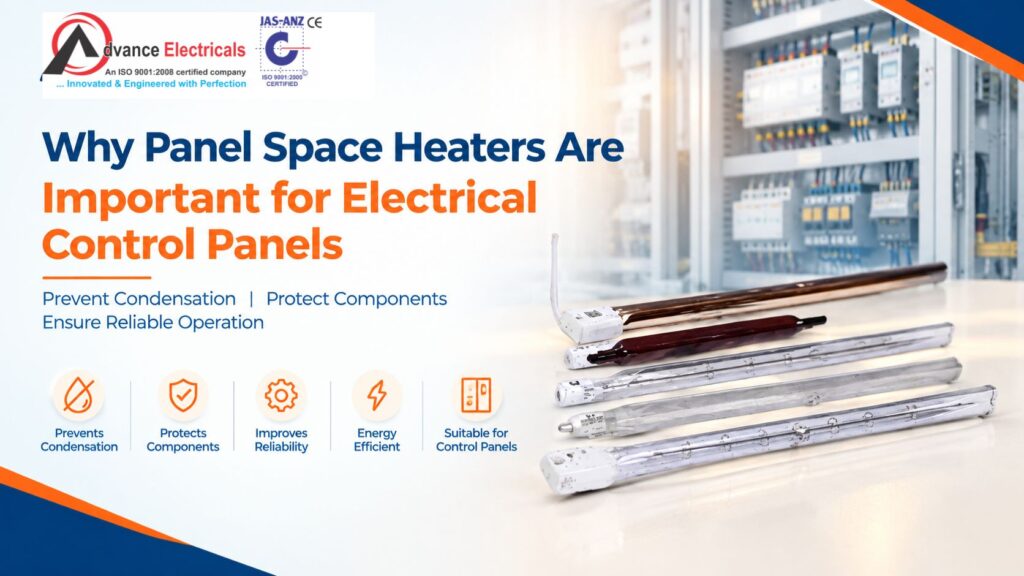
Electrical control panels are used in factories, manufacturing plants, automation systems, outdoor installations, and many industrial environments. These panels contain important electrical and electronic components such as circuit breakers, relays, PLCs, contactors, terminals, sensors, and controllers.
Although these components are designed to operate under industrial conditions, moisture and condensation can create serious problems. This is where a panel space heater becomes useful.
A panel space heater helps maintain a suitable temperature inside an electrical enclosure and reduces the risk of condensation. In this guide, we will explain why panel space heaters are important, how they work, their applications, benefits, and how to select the right heater for your control panel.
What Is a Panel Space Heater?
A panel space heater is a compact electrical heating device installed inside an electrical enclosure or control cabinet. Its primary purpose is to maintain the internal temperature above the dew point and help prevent moisture formation.
An enclosure can experience temperature changes because of outdoor weather, machine shutdowns, cold environments, or changes between day and night temperatures. These temperature variations can lead to condensation on electrical components.
A suitable electrical panel heater provides low-level, continuous heating to maintain a more stable internal environment.
Why Does Condensation Form Inside Electrical Panels?
Condensation occurs when moisture in the air changes from vapor into liquid because a surface becomes cold enough to reach the dew point.
This can happen inside electrical panels when:
- The panel is installed outdoors
- Ambient temperature changes frequently
- Equipment is switched off for long periods
- The enclosure is located in a humid environment
- Cold air enters through ventilation openings
- The panel is exposed to rain, fog, or moisture
- Internal components become colder than the surrounding air
Even a small amount of moisture can create problems for sensitive electrical equipment.
Why Are Panel Space Heaters Important?
1. They Help Prevent Condensation
The main purpose of a panel heater is to reduce condensation inside the enclosure.
By slightly increasing the internal temperature, the heater helps keep the enclosure surfaces and electrical components above the condensation point.
This makes a panel space heater particularly useful in humid, cold, and outdoor environments.
2. They Protect Electrical Components
Moisture can affect circuit boards, terminals, wiring connections, relays, sensors, and other electrical components.
Long-term exposure to moisture may contribute to corrosion, insulation problems, electrical leakage, or component failure.
A properly selected control panel heater helps maintain a more suitable internal environment for these components.
3. They Improve Equipment Reliability
Unexpected moisture-related failures can result in machine downtime and maintenance costs.
Keeping the enclosure warm enough to limit condensation can support more reliable operation of the electrical system.
For automated manufacturing equipment, this can be especially important because a small panel fault may interrupt an entire production process.
4. They Are Useful During Machine Shutdowns
Condensation can become a problem when machines are switched off and internal temperatures fall.
A panel heater can maintain a small amount of heat even when the main equipment is not operating, depending on the system design.
This can help keep the internal panel environment more stable during idle periods.
5. They Support Outdoor Electrical Installations
Outdoor control panels face changing temperatures, humidity, rain, and other environmental conditions.
Using an appropriately rated anti-condensation heater can help reduce moisture-related problems inside the enclosure.
How Does a Panel Space Heater Work?
The working principle is simple.
The heater converts electrical energy into heat. This heat is released into the interior of the electrical enclosure.
The heater does not necessarily need to make the panel hot. Its purpose is generally to maintain a temperature difference that reduces the likelihood of condensation.
In many installations, a thermostat or humidity-controlled device can be used with the heater so that heating occurs only when required.
This allows the system to maintain the desired internal conditions while avoiding unnecessary energy consumption.
What Is an Anti-Condensation Heater?
An anti-condensation heater is designed specifically to help prevent moisture formation inside electrical enclosures.
These heaters are commonly installed in:
- Electrical control cabinets
- Automation panels
- Switchgear enclosures
- Distribution panels
- Outdoor electrical cabinets
- Machine control panels
- Instrumentation enclosures
The heater maintains a controlled level of warmth so that cold surfaces are less likely to reach conditions where condensation can form.
Applications of Panel Space Heaters
Panel space heaters are used across many industries and applications.
Industrial Control Panels
Factories use control panels to operate motors, machines, automation systems, and production equipment. A heater can help protect the electrical components inside these cabinets.
Automation and PLC Panels
PLC and automation panels often contain sensitive electronic components. Controlling the panel environment can help improve their reliability.
Outdoor Electrical Cabinets
Outdoor enclosures are exposed to temperature changes and humidity. A heater can help reduce moisture-related issues.
Switchgear and Distribution Panels
Electrical distribution equipment may benefit from moisture control, especially in environments with high humidity or temperature variation.
Renewable Energy Installations
Solar and other outdoor energy systems may use electrical cabinets that require protection against changing environmental conditions.
Process Control Systems
Industrial process equipment often operates continuously in demanding environments. Panel heating can be part of an overall enclosure protection strategy.
Benefits of Using Panel Space Heaters
Reduced Moisture Problems
The biggest advantage is helping to reduce condensation inside the enclosure.
Better Protection of Electrical Components
A controlled internal environment can help reduce corrosion and moisture-related electrical issues.
Improved Equipment Life
By reducing environmental stress, a properly applied heater may contribute to longer service life for certain electrical components.
Compact Design
Panel heaters are generally designed for installation in limited cabinet space.
Easy Installation
Many models are designed for simple mounting inside electrical enclosures.
Energy-Efficient Operation
Low-wattage heaters can provide the required heat without unnecessary energy consumption, particularly when paired with suitable temperature or humidity control.
How to Choose the Right Panel Space Heater
Selecting a panel heater requires more than simply choosing a heater with a particular wattage.
1. Panel Size
The enclosure dimensions are an important consideration. A larger cabinet may require more heating capacity than a small enclosure.
2. Installation Location
Consider whether the panel is installed indoors, outdoors, in a cold location, or in a high-humidity environment.
3. Ambient Temperature
The minimum and maximum surrounding temperatures should be considered when selecting a heater.
4. Required Heating Capacity
The heater wattage should match the size and environmental conditions of the enclosure.
Selecting too little heating capacity may not provide adequate protection, while excessive heating may increase energy use.
5. Voltage
Check the available electrical supply before selecting the heater. The heater voltage should match the control system or electrical supply requirements.
6. Temperature Control
A thermostat can be used to switch the heater on and off according to the internal temperature.
For moisture-sensitive applications, a suitable humidity or condensation control system may also be considered.
7. Mounting Space
The heater should fit safely inside the enclosure without interfering with cables, terminals, breakers, or other components.
Common Problems Without a Panel Heater
When condensation is not controlled, several issues may develop inside an electrical enclosure.
These may include:
- Corrosion on metal components
- Electrical leakage
- Short circuits
- Insulation deterioration
- Terminal oxidation
- Circuit board damage
- Unstable electrical operation
- Unexpected equipment shutdown
The severity of these issues depends on the environment and the equipment involved, but preventing moisture is generally easier than dealing with moisture-related failures after they occur.
Best Practices for Panel Heater Installation
Correct installation is important for reliable performance.
The heater should be installed according to the manufacturer’s specifications and positioned so that heat can circulate effectively inside the enclosure.
Keep the heater away from components that may be sensitive to direct heat. Electrical connections should be properly secured, and appropriate protection should be provided according to the system design.
For critical applications, temperature monitoring and regular inspection can help identify problems early.
Panel Space Heater vs Conventional Heating
A panel space heater is specifically designed for enclosed electrical cabinets, while conventional industrial heaters may be intended for larger spaces, liquids, machines, or process equipment.
Panel heaters typically provide:
- Compact heating
- Low and controlled heat output
- Easy cabinet installation
- Localized temperature control
- Moisture and condensation protection
This makes them a practical choice when the main objective is to maintain suitable conditions inside an electrical enclosure rather than heat an entire room or process.
Why Choose Reliable Panel Space Heater Manufacturers?
The quality and design of the heater can directly affect performance and reliability. Working with experienced Panel Space Heater Manufacturers can be beneficial when you need the correct wattage, voltage, dimensions, mounting arrangement, or customized heating solution.
Advance Electricals provides industrial heating solutions for electrical panels, control cabinets, and different industrial applications. The right heater can be selected according to panel size, operating environment, temperature conditions, and moisture-control requirements.
Maintenance Tips for Panel Space Heaters
Regular maintenance can help keep the heater working properly.
Inspect the heater periodically for visible damage, loose connections, dust accumulation, or unusual heating behavior.
Check the thermostat or temperature-control device and make sure it is operating correctly.
Also inspect the enclosure for signs of moisture, corrosion, or water entry. A heater cannot compensate for major enclosure sealing problems, so the cabinet’s overall protection should also be maintained.
Conclusion
Panel space heaters play an important role in protecting electrical control panels from condensation and moisture-related problems. By maintaining a suitable internal temperature, they can help protect electrical components and support more reliable equipment operation.
An electrical panel heater can be especially useful in outdoor, cold, humid, and temperature-changing environments. For applications where condensation is a concern, an anti-condensation heater can provide a practical way to maintain better conditions inside the enclosure.
The right heater should always be selected according to panel size, ambient temperature, humidity, voltage, wattage, installation space, and control requirements.
Frequently Asked Questions (FAQs)
The main purpose of a panel space heater is to maintain the internal temperature of an electrical enclosure and help prevent condensation and moisture-related problems.
They are commonly used in electrical control panels, automation cabinets, PLC panels, switchgear, distribution enclosures, outdoor electrical cabinets, and industrial control systems.
A panel heater increases the internal enclosure temperature so that cold surfaces are less likely to reach the dew point where condensation can form.
Consider the panel size, ambient temperature, installation environment, available voltage, required wattage, mounting space, and temperature-control requirements.
Yes, suitable panel heaters can be used in outdoor electrical cabinets, provided the heater and enclosure are correctly selected for the environmental conditions and installation requirements.
Experienced Panel Space Heater Manufacturers can help provide heaters with suitable wattage, voltage, dimensions, mounting options, and designs for specific electrical enclosure requirements.