Plastic processing machines need accurate and consistent heating to produce quality products. The nozzle is one of the most important areas because it controls the flow of molten plastic from the barrel into the mold. If the nozzle temperature is not maintained properly, it can cause poor material flow, defects, and production problems.
Choosing the right nozzle heater is therefore important for achieving stable temperature, efficient operation, and better product quality. In this guide, we explain the key factors you should consider when selecting a nozzle heater for plastic processing machines.
What Is a Nozzle Heater?
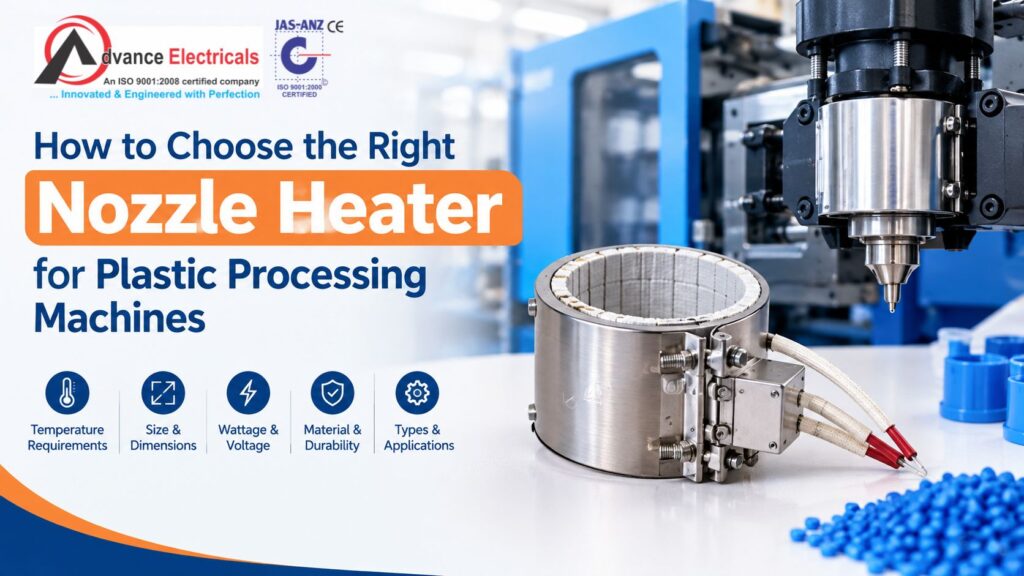
A nozzle heater is a heating component installed around the nozzle of a plastic processing machine. Its main function is to maintain the required temperature of the plastic material as it passes through the nozzle.
Nozzle heaters are commonly used in injection molding machines, extrusion equipment, and other plastic processing systems. They are available in different designs, sizes, wattages, and materials depending on the machine and application.
Why Is Choosing the Right Nozzle Heater Important?
The correct heater helps maintain a stable processing temperature and prevents the plastic material from cooling before entering the mold.
An unsuitable heater can lead to:
- Uneven heating
- Material blockage
- Inconsistent plastic flow
- Excessive energy consumption
- Heater failure
- Poor product quality
- Longer production cycles
A properly selected heater can improve heating efficiency and help maintain consistent machine performance.
Important Factors for Choosing a Nozzle Heater
1. Check the Nozzle Size
The first step is to measure the nozzle accurately. The heater should fit properly around the nozzle surface to provide effective heat transfer.
Check the following dimensions:
- Inner diameter
- Outer diameter
- Heater width or length
- Available installation space
A heater that is too loose may not transfer heat efficiently, while an incorrectly sized heater may be difficult to install.
2. Consider the Required Temperature
Different plastic materials require different processing temperatures. Before selecting a heater, check the operating temperature required by your material and machine.
For example, common engineering plastics may require higher temperatures than standard plastics. The heater should be capable of reaching and maintaining the required temperature without unnecessary overheating.
3. Select the Correct Wattage
Wattage determines how much heat the heater can generate. The correct wattage depends on the nozzle size, material, operating temperature, machine design, and heat loss.
A heater with insufficient wattage may take too long to reach the desired temperature. On the other hand, excessive wattage can cause overheating if temperature control is not suitable.
Therefore, choose the wattage according to the actual application requirements.
4. Choose the Right Heater Type
Nozzle heaters are available in different designs to suit different plastic processing applications.
Some commonly used options include:
- Ceramic nozzle heaters
- Mica nozzle heaters
- Band-type heaters
- Custom-designed nozzle heaters
The best option depends on the required temperature, available space, heating speed, and machine configuration.
5. Check the Heater Material
The construction material also affects heater performance and durability. Good-quality materials can provide better heat transfer, mechanical strength, and resistance to continuous operating temperatures.
For demanding industrial applications, it is important to choose a heater manufactured using suitable insulation and heating materials.
6. Look at Heating Uniformity
Uniform heating is essential in plastic processing. Hot spots or cold areas around the nozzle can affect material flow and product quality.
A properly designed heater should distribute heat as evenly as possible across the required heating area. This helps maintain consistent plastic temperature during production.
7. Consider Operating Conditions
The working environment can affect heater life and performance. Consider factors such as:
- Continuous operating hours
- Maximum temperature
- Machine vibration
- Moisture
- Available installation space
- Frequency of machine operation
For heavy-duty applications, a robust heater design may be required.
8. Check Voltage and Electrical Specifications
Always verify the electrical specifications before purchasing a nozzle heater.
Important specifications include:
- Voltage
- Wattage
- Resistance
- Lead wire type
- Lead wire length
- Connection requirements
The heater specifications should match the machine’s electrical system. Incorrect voltage or wattage can result in poor heating or premature heater failure.
How to Calculate the Required Heater Wattage?
The required wattage is not the same for every nozzle. It depends on several factors, including nozzle dimensions, material, temperature, heating time, and heat loss.
For this reason, it is better to provide the heater manufacturer with complete application details rather than selecting wattage only by nozzle size.
For customized heaters, manufacturers may consider:
- Nozzle dimensions
- Operating temperature
- Required heating time
- Machine type
- Plastic material
- Available electrical supply
- Installation conditions
This information helps in selecting a suitable heating solution.
Common Problems Caused by the Wrong Nozzle Heater
Using an unsuitable heater can create several production issues.
Uneven Heating
If heat is not distributed properly, some areas of the nozzle may remain colder than others. This can affect the flow of plastic.
Slow Heating
A heater with insufficient wattage may require more time to reach the desired temperature, increasing machine startup time.
Overheating
An incorrectly selected high-wattage heater can create excessive heat and may damage the plastic material or nozzle components.
Short Heater Life
Operating a heater beyond its recommended temperature or electrical specifications can reduce its service life.
Poor Product Quality
Incorrect nozzle temperature can contribute to problems such as inconsistent filling, poor surface finish, material leakage, and other molding defects.
Tips for Better Nozzle Heater Performance
Following proper operating practices can help extend heater life and maintain consistent performance.
- Select the correct heater size.
- Use suitable wattage for the application.
- Keep the nozzle and heater surfaces clean.
- Avoid operating beyond the recommended temperature.
- Check electrical connections regularly.
- Inspect heater leads for damage.
- Monitor temperature using a suitable controller and sensor.
- Replace damaged heaters promptly.
Why Choose a Customized Nozzle Heater?
Every plastic processing machine may have different nozzle dimensions and heating requirements. Standard heaters may not always provide the required fit or performance.
A customized nozzle heater can be manufactured according to specific dimensions, wattage, voltage, lead configuration, and temperature requirements.
This can provide better fitting, improved heat transfer, and more consistent heating for specialized applications.
Why Choose Advance Electricals for Nozzle Heaters?
Advance Electricals provides industrial heating solutions designed for different plastic processing requirements. Our nozzle heaters can be manufactured according to application-specific dimensions and electrical specifications.
We focus on suitable heater construction, consistent heating performance, reliable materials, and practical customization options. Whether you require heaters for injection molding machines or other plastic processing equipment, selecting the right specifications is important for achieving dependable performance.
Conclusion
Choosing the right nozzle heater is important for maintaining consistent temperature and smooth plastic flow in processing machines. Factors such as nozzle dimensions, temperature requirements, wattage, heater type, material, voltage, and operating conditions should be considered before making a selection.
A properly matched heater can support efficient heating, reduce production problems, and improve overall machine performance. For specialized applications, a customized solution can be a better option than a standard heater.
If you are unsure which nozzle heater is suitable for your machine, providing the complete nozzle and application details to an experienced heater manufacturer can help you select the right solution.
Frequently Asked Questions
A nozzle heater maintains the required temperature of molten plastic as it passes through the machine nozzle, helping maintain smooth and consistent material flow.
Measure the nozzle’s diameter, heating length, and available installation space. The heater should fit correctly around the heating area.
Yes. Nozzle heaters can be customized according to dimensions, voltage, wattage, lead configuration, temperature requirements, and machine specifications.
Excessive heater power can cause overheating, potentially affecting the plastic material, nozzle, or other machine components. Proper temperature control is therefore important.
Nozzle heaters are commonly used in plastic injection molding, extrusion, packaging, automotive plastic components, consumer products, and other plastic processing applications.