
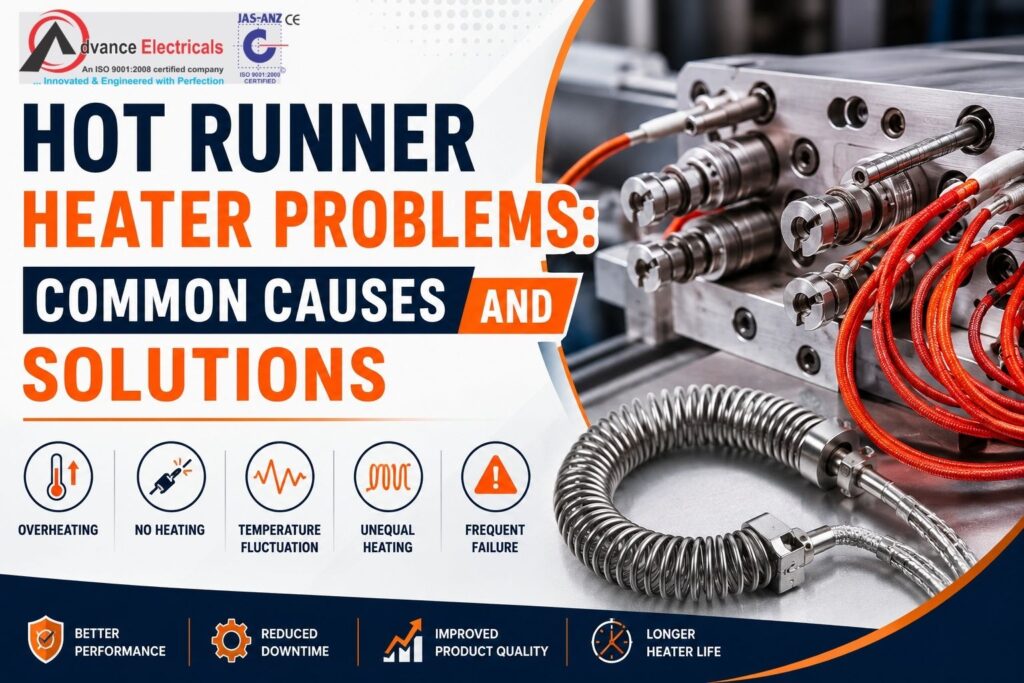
Hot runner systems are widely used in plastic injection molding because they help maintain molten plastic at the required temperature from the injection unit to the mold cavity. A properly working hot runner heater is essential for maintaining stable temperature, reducing material waste, improving cycle times, and producing consistent molded parts.
However, hot runner heaters can develop problems due to incorrect installation, overheating, poor electrical connections, moisture, contamination, improper heater selection, or normal wear and tear. Even a small heater problem can affect the entire molding process and lead to defects, downtime, and increased production costs.
In this guide, we will discuss the most common hot runner heater problems, their possible causes, practical solutions, and maintenance tips to help improve heater performance.
What Is a Hot Runner Heater?
A hot runner heater is a heating element used in a hot runner mold system to maintain the temperature of molten plastic as it travels through the manifold, nozzle, or other heated components.
The heater works with temperature sensors and controllers to maintain a specific processing temperature. Depending on the mold design, different types of heaters may be used, including:
- Coil heaters
- Nozzle heaters
- Cartridge heaters
- Band heaters
- Manifold heaters
- Hot runner coil heaters
The heater must provide consistent and controlled heat to prevent the plastic from becoming too cold or overheating.
Why Are Hot Runner Heaters Important?
Hot runner heaters directly influence the performance of an injection molding system. When the heater works correctly, it helps maintain stable melt temperature throughout the hot runner system.
Some major benefits include:
- Consistent plastic melt temperature
- Reduced material waste
- Better part quality
- Faster production cycles
- Reduced cold runner waste
- Improved molding efficiency
- Better control over processing conditions
On the other hand, heater failure can cause temperature fluctuations, material degradation, leakage, short shots, burn marks, and inconsistent product quality.
Common Hot Runner Heater Problems
1. Hot Runner Heater Not Heating
One of the most common problems is a heater that does not generate heat after the system is switched on.
Possible Causes
Several issues can cause a heater to stop heating:
- Broken heating element
- Open electrical circuit
- Loose connection
- Incorrect wiring
- Damaged cable
- Faulty temperature controller
- Incorrect voltage
- Burned-out heater
- Damaged terminal
Solution
First, switch off the power and follow proper electrical safety procedures. Check the heater’s electrical connections and inspect the wiring for visible damage.
Resistance can be measured using an appropriate multimeter to determine whether the heating element is electrically continuous. If the heater has an open circuit or damaged element, replacement may be required.
It is also important to check the controller output and power supply before replacing the heater.
2. Heater Overheating
A hot runner heater may sometimes reach a temperature higher than the required setpoint.
This can cause plastic degradation, burn marks, discoloration, and damage to mold components.
Possible Causes
- Faulty temperature controller
- Incorrect temperature settings
- Damaged thermocouple
- Poor sensor positioning
- Incorrect heater wattage
- Controller relay or output failure
- Poor temperature feedback
Solution
Check the temperature controller settings and verify that the sensor is working correctly.
The thermocouple should be properly positioned to measure the actual temperature of the heated component. If the sensor is damaged or incorrectly installed, the controller may receive inaccurate temperature information.
The heater’s voltage and wattage should also be checked against the original design specifications.
3. Uneven Heating
Uneven temperature distribution can create serious molding problems. One area of the hot runner system may be too hot while another remains below the required processing temperature.
Common Causes
- Incorrect heater placement
- Uneven heater contact
- Damaged heating element
- Incorrect heater design
- Poor thermal insulation
- Inadequate temperature control
- Improper heater sizing
Effects on Injection Molding
Uneven heating can result in:
- Short shots
- Flow problems
- Weld lines
- Material degradation
- Inconsistent part dimensions
- Poor surface finish
- Color variation
Solution
Check the heater installation and make sure the heating element has proper contact with the heated component.
For complex hot runner systems, temperature mapping can help identify cold and hot spots. If the existing heater cannot provide the required heat distribution, a properly designed custom heater may be a better solution.
4. Heater Burning Out Frequently
If hot runner heaters repeatedly fail after a short period, simply replacing the heater may not solve the actual problem.
Possible Causes
Frequent heater failure can be caused by:
- Excessive operating temperature
- Incorrect voltage
- Incorrect watt density
- Poor-quality heater
- Moisture contamination
- Mechanical damage
- Improper installation
- Thermal expansion
- Frequent thermal cycling
Solution
Check the operating conditions before installing another heater.
Make sure the heater voltage and wattage match the hot runner system. The heater should also be selected according to the available installation space, operating temperature, and application requirements.
A properly designed heater with suitable materials can help reduce repeated failures.
5. Short Circuit in the Heater
A short circuit can occur when the electrical insulation between the resistance wire and outer sheath becomes damaged.
This can be a serious issue because it may cause electrical faults and potentially damage other components.
Possible Causes
- Damaged insulation
- Moisture entering the heater
- Physical damage
- Excessive temperature
- Improper manufacturing
- Damaged electrical terminals
Solution
Stop operating the affected heater and inspect the electrical system safely.
Electrical insulation and resistance should be checked using appropriate testing equipment by a qualified person. If the heater has insulation damage, replacement is generally recommended rather than continuing to operate it.
6. Hot Runner Heater Taking Too Long to Heat
Another common issue is slow heating. The hot runner system may take much longer than expected to reach its operating temperature.
Possible Causes
- Low heater wattage
- Incorrect voltage
- Damaged heating element
- Excessive heat loss
- Poor insulation
- Incorrect heater selection
- Controller limitations
Solution
Check the heater’s rated voltage and wattage first.
If the heater is correctly rated but still heats slowly, inspect the insulation and mechanical installation. Excessive heat loss can increase heating time and energy consumption.
In some applications, selecting a heater with the correct power density and thermal characteristics can significantly improve heat-up performance.
7. Temperature Fluctuation
Temperature should remain relatively stable once the hot runner reaches its operating condition. Frequent temperature fluctuations can affect molding consistency.
Common Causes
- Faulty thermocouple
- Loose sensor
- Incorrect PID settings
- Controller problems
- Heater output variation
- Poor thermal contact
- Inconsistent power supply
Solution
Start by checking the temperature sensor and controller.
Make sure the thermocouple is correctly installed and securely positioned. The controller’s PID parameters may also need adjustment according to the system characteristics.
If the heater itself is producing inconsistent output, its electrical resistance and condition should be checked.
8. Hot Runner Heater Causing Plastic Degradation
If the heater becomes excessively hot, the plastic can remain at high temperature for too long. This may cause material degradation.
Signs of Material Degradation
Common signs include:
- Burn marks
- Dark spots
- Discoloration
- Unusual smell
- Black particles
- Reduced product quality
Possible Causes
- Excessive temperature
- Poor temperature control
- Incorrect heater placement
- Faulty thermocouple
- Heater creating localized hot spots
- Material remaining in the hot runner for too long
Solution
Verify the actual hot runner temperature rather than relying only on the controller display.
Check the thermocouple position and controller operation. The processing temperature should also remain within the recommended range for the plastic material being used.
9. Loose Heater Connections
Electrical connections can become loose due to vibration, thermal expansion, repeated heating cycles, or improper installation.
A loose connection can increase electrical resistance at the connection point and generate additional heat.
Symptoms
- Intermittent heating
- Temperature fluctuations
- Localized overheating
- Electrical arcing
- Heater failure
- Controller alarms
Solution
Inspect electrical connections during scheduled maintenance. Make sure terminals and connections are properly secured according to the equipment manufacturer’s requirements.
Damaged terminals, cables, or connectors should be replaced.
10. Heater Damage During Installation
Hot runner heaters can be damaged if they are forced into position, bent incorrectly, scratched, or installed with improper tools.
This is especially important for cartridge and coil-type heaters where accurate fit is necessary.
Solution
Always follow the heater installation instructions.
The heater should fit correctly within its designed installation area. Avoid excessive force during installation and make sure the surrounding components are clean and free from material buildup.
Proper installation can significantly improve heater service life.
11. Moisture-Related Heater Problems
Moisture can sometimes enter heating elements, especially when heaters have been stored incorrectly or exposed to humid conditions.
Moisture can reduce electrical insulation performance and may cause electrical leakage or failure when power is applied.
Solution
Store heaters in clean and dry conditions. Before installation, inspect the heater and electrical insulation according to appropriate procedures.
If moisture-related insulation problems are suspected, the heater should be tested before being placed into service.
12. Incorrect Heater Selection
One of the most important causes of hot runner heater problems is selecting a heater that does not match the application.
A heater should not be selected only by physical dimensions. Electrical and thermal characteristics are equally important.
Important selection parameters include:
- Voltage
- Wattage
- Resistance
- Heater dimensions
- Heater diameter
- Operating temperature
- Watt density
- Lead configuration
- Installation method
- Material compatibility
Choosing the correct heater specification from the beginning can prevent many performance problems.
Hot Runner Heater Troubleshooting Table
| Problem | Possible Cause | Recommended Action |
| Heater not heating | Open circuit or loose wiring | Check continuity and connections |
| Heater overheating | Faulty sensor or controller | Check thermocouple and controller |
| Uneven heating | Poor contact or incorrect heater | Inspect installation and heater design |
| Frequent heater failure | Wrong wattage or excessive temperature | Verify heater specifications |
| Slow heating | Low wattage or heat loss | Check power rating and insulation |
| Temperature fluctuation | Sensor or controller problem | Inspect sensor and control system |
| Short circuit | Insulation damage | Test insulation and replace damaged heater |
| Plastic degradation | Excessive temperature | Check actual temperature and sensor |
| Intermittent heating | Loose connection | Inspect electrical terminals |
| Heater damaged during installation | Improper fitting | Follow correct installation procedure |
How to Prevent Hot Runner Heater Problems
Preventive maintenance is generally more effective than waiting for a heater to fail during production.
Regularly Inspect Heaters
Check heaters for signs of physical damage, discoloration, cracking, or deformation.
Check Electrical Connections
Loose connections should be identified and corrected during scheduled maintenance.
Monitor Temperature
Keep track of heating zones and watch for unusual temperature changes.
Maintain Proper Sensor Position
A correctly positioned thermocouple provides more accurate temperature feedback.
Use the Correct Heater Specifications
Always verify voltage, wattage, resistance, dimensions, and heater construction before installation.
Avoid Excessive Thermal Shock
Rapid and uncontrolled heating or cooling can place additional stress on heating elements.
Keep the Mold and Heater Area Clean
Plastic residue and contamination around the heating system can affect heat transfer and heater performance.
How to Choose a Reliable Hot Runner Heater
When purchasing a hot runner heater, price should not be the only consideration. Heater construction, material quality, dimensional accuracy, electrical specifications, and application suitability can have a major impact on performance.
Before selecting a heater, provide the manufacturer with accurate information such as:
- Existing heater dimensions
- Voltage
- Wattage
- Resistance
- Required operating temperature
- Heater type
- Installation location
- Hot runner component details
- Application requirements
An experienced Hot Runner Heater Manufacturer can use these details to recommend or manufacture a heater suitable for the application.
Why Choose Advance Electricals for Hot Runner Heaters?
Advance Electricals provides industrial heating solutions for applications that require controlled and reliable heat. Hot runner systems often require heaters with specific dimensions, electrical ratings, and heating characteristics.
Advance Electricals focuses on application-based heater solutions and can support requirements related to heater design, specifications, dimensions, voltage, wattage, and installation conditions.
For manufacturers looking for reliable Hot Runner Heater Manufacturers, choosing a supplier that understands the actual operating requirements can help improve heater performance and reduce avoidable downtime.
Conclusion
Hot runner heaters are critical components in injection molding systems, and even a small heating problem can affect production quality and efficiency. Problems such as overheating, uneven heating, slow heat-up, temperature fluctuation, electrical failure, and frequent burnout often have identifiable causes.
The best approach is to identify the root cause rather than repeatedly replacing failed heaters. Correct heater selection, proper installation, accurate temperature control, regular maintenance, and suitable operating conditions can significantly improve heater performance and service life.
For demanding injection molding applications, working with an experienced Hot Runner Heater Manufacturer can help ensure that the heater is correctly matched to the hot runner system and production requirements.
Frequently Asked Questions (FAQs)
Common problems include heater failure, overheating, uneven heating, slow heating, temperature fluctuation, short circuits, frequent burnout, loose connections, and incorrect heater selection.
Frequent heater burnout can be caused by excessive temperature, incorrect voltage or wattage, poor installation, moisture, mechanical damage, unsuitable heater design, or repeated thermal stress.
Uneven heating can result from incorrect heater placement, poor thermal contact, damaged heating elements, incorrect heater sizing, poor insulation, or temperature-control problems.
Use the correct heater specifications, install it properly, monitor temperature, maintain electrical connections, inspect the heating elements regularly, and operate the system within recommended limits.
Yes. Hot runner heaters can be customized according to dimensions, voltage, wattage, resistance, shape, lead configuration, heating requirements, and installation conditions.
A heater should generally be replaced when it has an open circuit, damaged insulation, physical damage, repeated failure, unstable heating performance, or cannot maintain the required temperature.