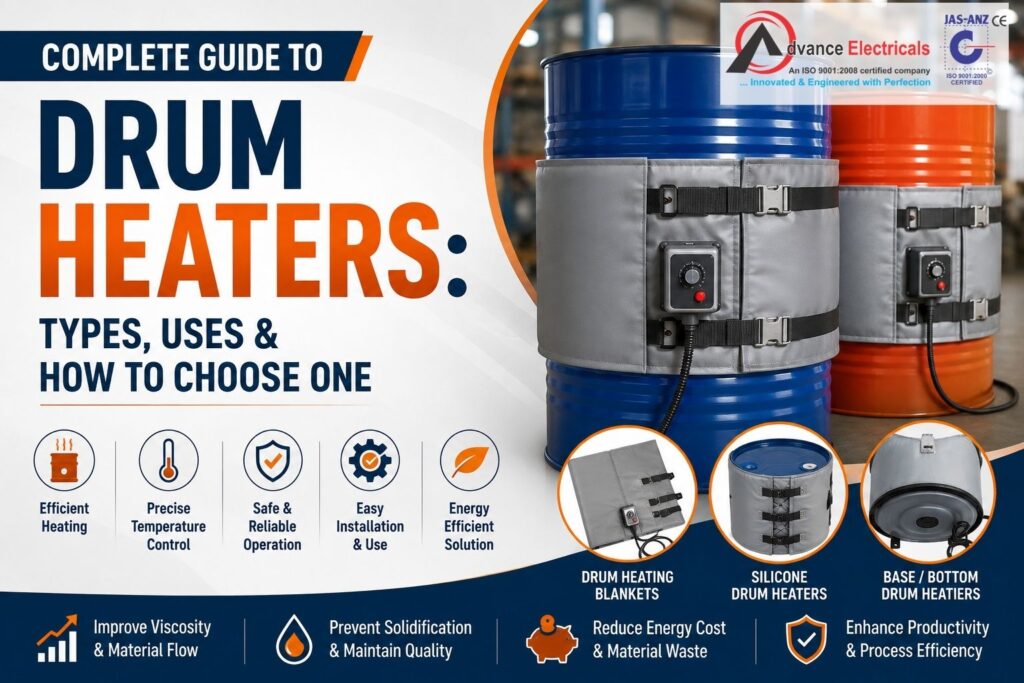
Drums and barrels are widely used for storing and transporting liquids, chemicals, oils, resins, adhesives, paints, food ingredients, and many other industrial materials. However, some materials become thick, solid, or difficult to pump when exposed to low temperatures.
This is where Drum Heaters provide an effective solution.
A drum heater is designed to apply controlled heat around a drum or barrel so that the material inside can reach and maintain the required temperature. By improving temperature control, drum heaters can help maintain material viscosity, make dispensing easier, reduce material waste, and support smoother industrial operations.
In this blog, we will explain what drum heaters are, how they work, their different types, applications, benefits, and the key factors to consider when choosing the right heater for your requirements.
What Is a Drum Heater?
A drum heater is an industrial heating device designed to heat the contents of drums, barrels, or similar containers.
The heater is generally installed around the outside surface of the drum. When electrical power is supplied, the heating element generates heat and transfers it through the drum wall to the material inside.
Depending on the application, drum heaters can be used to:
- Increase the temperature of stored materials
- Maintain a specific material temperature
- Reduce viscosity
- Prevent materials from solidifying
- Improve pumping and dispensing
- Protect temperature-sensitive materials from cold conditions
Drum heaters are available in different designs, sizes, wattages, and temperature ranges to suit different container and material requirements.
Why Are Drum Heaters Important in Industrial Applications?
Many industrial materials cannot be used efficiently at low temperatures.
For example, oils, lubricants, adhesives, resins, waxes, paints, and certain chemicals may become thicker when the surrounding temperature decreases. This can make pumping, mixing, pouring, or transferring the material difficult.
A drum heater provides controlled heating without requiring the material to be transferred into another heating vessel.
This can offer several operational advantages:
- Easier material handling
- Better viscosity control
- Faster dispensing
- Reduced material wastage
- Improved production efficiency
- Better temperature stability
How Does a Drum Heater Work?
The working principle of a drum heater is relatively simple.
The heating element produces heat when electrical energy passes through it. The heater is positioned around the drum or container, allowing heat to transfer through the drum wall.
The heat gradually increases the temperature of the material inside.
A typical drum heating system may include:
- Heating element
- Outer insulation
- Temperature controller
- Temperature sensor
- Electrical connection
- Adjustable fastening system
The controller regulates the heating process according to the required temperature.
Once the desired temperature is reached, the control system can reduce or interrupt power to prevent unnecessary overheating.
Types of Drum Heaters
Different drum heating solutions are available depending on the drum size, material, required temperature, and application.
1. Drum Heating Blankets
Heating blankets are flexible heaters designed to wrap around the outside of a drum.
They are commonly used where flexibility and easy installation are important.
Features
- Flexible construction
- Easy installation and removal
- Suitable for different industrial materials
- Available for different drum sizes
- Can provide controlled heating
Drum heating blankets are particularly useful for materials that become more viscous during storage.
2. Silicone Drum Heaters
Silicone-based heating systems use flexible silicone heating elements that can conform closely to the drum surface.
They are useful when uniform heat transfer and flexibility are required.
Benefits
- Flexible design
- Good surface contact
- Uniform heat distribution
- Suitable for industrial environments
- Can be customized for different applications
3. Insulated Drum Heaters
Insulated drum heaters combine heating elements with an insulating layer.
The insulation helps reduce heat loss to the surrounding environment and allows more of the generated heat to remain focused on the drum.
These heaters can be particularly useful in cold environments or applications requiring longer temperature maintenance.
4. Drum Heating Jackets
Heating jackets are designed to surround the drum and provide controlled heating around its surface.
They may be used for applications involving oils, adhesives, chemicals, resins, and other materials requiring temperature maintenance.
The exact design depends on drum dimensions, temperature requirements, and operating conditions.
5. Base or Bottom Drum Heaters
Some applications require heating primarily from the bottom of the container.
Bottom heaters can help warm the lower section of the drum, which may be useful when the material tends to settle or solidify near the bottom.
They can also be used alongside other heating systems when more controlled heating is required.
Common Applications of Drum Heaters
Drum heaters are used across many industries because a wide variety of materials need temperature control.
Chemical Industry
Chemical products may require specific storage temperatures to maintain their physical properties.
Drum heaters can help prevent certain materials from becoming too viscous or solidifying during storage.
Oil and Lubricant Industry
Oils and lubricants can become thicker at low temperatures.
Controlled heating can help maintain suitable viscosity for pumping and dispensing.
Adhesive Industry
Some adhesives become difficult to pour or pump when their temperature drops.
Drum heating can help maintain the required working temperature and improve handling.
Paint and Coating Industry
Certain paints, coatings, and related materials may require temperature control for proper mixing and application.
Drum heaters can help maintain suitable material conditions.
Food Processing
Some food-grade materials, fats, oils, and ingredients may require controlled heating to remain suitable for processing.
For these applications, the heater design and material compatibility should be selected according to the relevant processing requirements.
Pharmaceutical Industry
Some pharmaceutical and related materials may require controlled temperature conditions.
Where drum heating is used, the heating system should be selected according to the material, process requirements, and applicable safety standards.
Resin and Polymer Processing
Resins and polymer-based materials can become highly viscous at lower temperatures.
Heating the drum can improve material flow and make transfer into processing equipment easier.
Benefits of Using Drum Heaters
1. Improved Material Flow
Heating can reduce the viscosity of thick materials, making them easier to pour, pump, and transfer.
2. Better Temperature Control
A temperature-controlled heater allows operators to maintain the material within a desired temperature range.
3. Reduced Material Waste
When thick or solidified material is difficult to remove from a drum, some material may remain unused. Controlled heating can help improve material recovery.
4. Improved Productivity
Easier material handling can reduce delays during pumping, mixing, and dispensing operations.
5. Energy Efficiency
Insulated and properly controlled heating systems can reduce unnecessary heat loss and energy consumption.
6. Easy Installation
Many drum heating systems are designed for quick installation around existing drums without major modifications to the container.
7. Flexible Application
Drum heaters can be used for different materials and container sizes when the heater is correctly selected.
How to Choose the Right Drum Heater
Choosing the right heater is important for achieving safe, reliable, and efficient heating.
Consider the following factors before purchasing a drum heating system.
1. Drum Size
First, determine the size and dimensions of the drum.
Common industrial drums may have different capacities and dimensions. The heater should be compatible with the actual container size.
2. Material Inside the Drum
The material being heated is one of the most important selection factors.
Consider:
- Viscosity
- Melting point
- Required operating temperature
- Heat sensitivity
- Chemical compatibility
- Required heating time
A heater suitable for oil may not necessarily be suitable for another material.
3. Required Temperature
Determine the minimum, normal, and maximum required operating temperatures.
The heater should be capable of reaching the required temperature while providing appropriate control.
Avoid selecting a heater based only on its maximum temperature rating.
4. Heating Power
The required wattage depends on factors such as:
- Drum size
- Material quantity
- Starting temperature
- Required final temperature
- Ambient temperature
- Heating time
- Insulation
- Heat loss
A properly calculated wattage helps achieve the desired heating performance without unnecessary energy consumption.
5. Temperature Control
A drum heater should ideally include an appropriate temperature control system.
A controller can help maintain the required temperature and reduce the risk of overheating.
Depending on the application, thermostats, thermocouples, RTDs, or digital temperature controllers may be used.
6. Insulation
Insulation is especially important when the drum is used in a cold environment or when the material must remain at a specific temperature for an extended period.
Good insulation can reduce heat loss and improve overall heating efficiency.
7. Operating Environment
Consider where the drum heater will be used.
Important environmental factors include:
- Indoor or outdoor installation
- Ambient temperature
- Moisture
- Dust
- Chemical exposure
- Continuous or intermittent operation
The heater should be selected according to the actual operating environment.
8. Safety Requirements
Safety should always be considered when heating industrial materials.
The heating system should include appropriate temperature control and protection against overheating.
For hazardous or flammable materials, the heater and electrical system must be selected according to the applicable safety requirements and hazardous-area classification.
Drum Heater Selection: Quick Comparison
| Selection Factor | Why It Matters |
| Drum Size | Ensures proper heater fit |
| Material Type | Determines heating requirements |
| Required Temperature | Helps select the correct heater rating |
| Wattage | Determines heating speed and capacity |
| Temperature Control | Prevents overheating and improves stability |
| Insulation | Reduces heat loss |
| Environment | Determines suitable heater construction |
| Safety Requirements | Helps ensure safe operation |
How to Improve Drum Heating Efficiency
Selecting the correct heater is only the first step. Proper installation and operation can also improve performance.
Use Suitable Insulation
Insulation helps retain heat and reduces heat loss from the drum surface.
Avoid Excessive Temperature
Heating the material beyond the required temperature wastes energy and may affect material quality.
Use Temperature Controllers
Automatic temperature control can prevent continuous heating after the desired temperature is reached.
Maintain Good Surface Contact
The heater should be properly positioned around the drum so that heat can transfer effectively.
Inspect the Heater Regularly
Check the heater, electrical connections, temperature sensor, controller, and insulation for signs of damage or wear.
Keep the Heating Surface Clean
Dirt, chemical residue, and other contaminants can affect heater performance and heat transfer.
Common Problems With Drum Heating
Improper heater selection or operation can lead to several problems.
Slow Heating
This may occur when the heater has insufficient wattage for the drum size, material quantity, or environmental conditions.
Uneven Heating
Poor heater placement or unsuitable heater design can cause temperature variations across the drum.
Excessive Energy Consumption
Energy consumption may increase when the heater is oversized, poorly insulated, or operating without proper temperature control.
Overheating
Overheating can occur due to incorrect controller settings, sensor failure, or selecting an unsuitable heating system.
Short Heater Life
Operating a heater beyond its recommended electrical or temperature limits can reduce its service life.
Drum Heater Maintenance Tips
Regular maintenance helps improve reliability and reduce unexpected downtime.
Manufacturers should:
- Inspect heating elements regularly.
- Check electrical connections.
- Verify temperature controller operation.
- Inspect sensors for accurate readings.
- Check insulation for damage.
- Keep the heater surface clean.
- Look for signs of overheating.
- Follow the manufacturer’s operating instructions.
If a heater shows physical damage or abnormal electrical behavior, it should be inspected by a qualified technician before further use.
Why Custom Drum Heaters Can Be a Better Choice
Standard heating solutions may not always match every industrial application’s requirements.
Custom drum heaters can be designed according to specific parameters such as:
- Drum diameter
- Drum height
- Capacity
- Voltage
- Wattage
- Temperature range
- Heating area
- Mounting arrangement
- Insulation requirements
- Control system
A custom solution can provide better compatibility between the heater and the specific application.
Drum Heaters for Industrial Material Handling
In many manufacturing environments, the heating process is directly connected to material handling.
A material that is easy to pump at one temperature may become highly viscous at another. This can increase pump load, slow down production, or make dispensing difficult.
By maintaining the material at an appropriate temperature, a drum heating system can support smoother material transfer and improve overall process efficiency.
This makes drum heaters useful not only as heating devices but also as part of a broader material-handling system.
Conclusion
Drum heaters are an effective solution for applications where materials stored in drums require controlled heating. They can help reduce viscosity, prevent solidification, improve material flow, support easier dispensing, and maintain suitable processing conditions.
The right heater depends on several factors, including drum size, material type, required temperature, wattage, temperature control, insulation, operating environment, and safety requirements.
Instead of selecting a heater based only on price or maximum temperature, manufacturers should evaluate the complete application. A properly designed heating system can provide better efficiency, reliable temperature control, longer service life, and improved material handling.
For businesses looking for reliable industrial heating solutions, Advance Electricals can provide heating solutions designed according to specific application and machine requirements.
Frequently Asked Questions (FAQs)
A drum heater is used to heat or maintain the temperature of materials stored inside drums or barrels. It is commonly used for oils, adhesives, resins, chemicals, paints, waxes, and other temperature-sensitive materials.
Yes. Heating can reduce the viscosity of many materials, making them easier to pump, pour, mix, and transfer. The correct temperature depends on the specific material.
Consider the drum size, material inside the drum, required temperature, wattage, heating time, insulation, operating environment, and temperature control requirements.
A properly sized and temperature-controlled drum heater can provide efficient heating. Insulation can further reduce heat loss and help maintain the required temperature.
Yes. Industrial drum heating systems can be customized according to drum dimensions, voltage, wattage, temperature range, heating area, insulation, and control requirements.
They can be suitable for certain chemicals, but the heater must be selected according to the chemical properties, required temperature, container material, and applicable safety requirements. Special care is required for flammable or hazardous materials.
Heating time depends on drum size, material quantity, starting temperature, target temperature, heater wattage, insulation, and ambient conditions. There is no single heating time that applies to every application.
Some drum heating systems may be suitable for plastic containers, but the heater temperature must remain within the safe temperature limits of the container and the material inside it. Always verify compatibility before use.