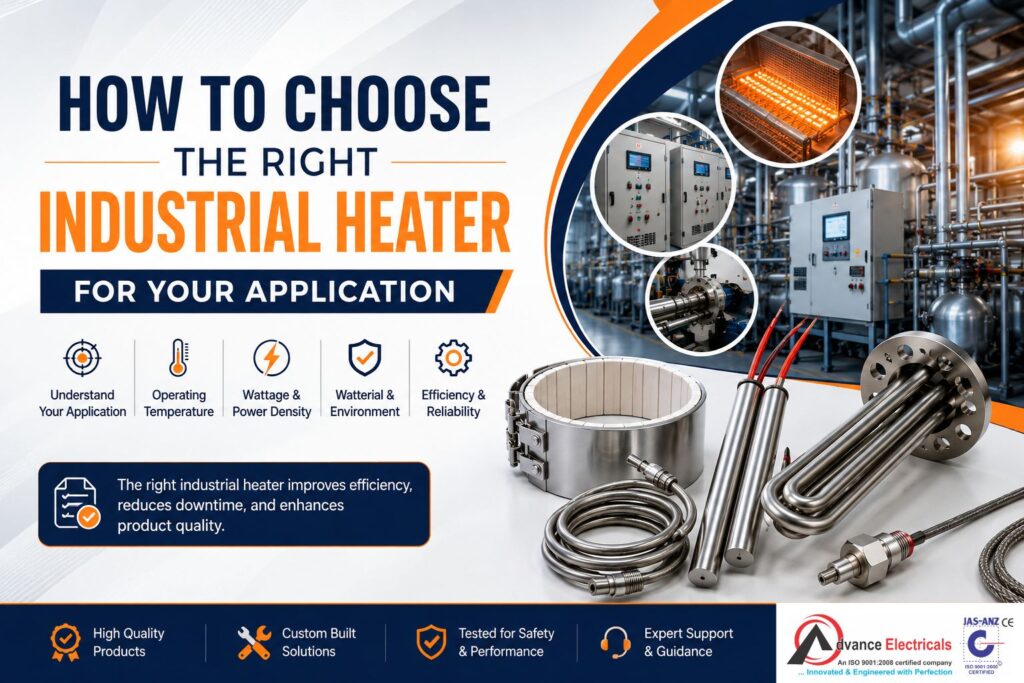
Selecting the right industrial heater is one of the most important decisions for any manufacturing process. The correct heater improves production efficiency, reduces energy consumption, extends equipment life, and ensures consistent product quality. On the other hand, choosing the wrong heater can lead to uneven heating, increased maintenance costs, unexpected downtime, and higher operating expenses.
Whether you operate in the plastic processing, packaging, pharmaceutical, food processing, chemical, textile, automotive, or electronics industry, understanding the different types of industrial heaters and their applications will help you make the best choice.
In this blog, we’ll discuss the key factors to consider before selecting an industrial heater and introduce the most common heater types used across various industries.
Why Choosing the Right Industrial Heater Matters
Industrial heaters are designed to transfer heat efficiently for specific applications. Since every manufacturing process has unique heating requirements, selecting the right heater offers several advantages:
- Improved production efficiency
- Accurate temperature control
- Lower power consumption
- Longer equipment lifespan
- Reduced maintenance costs
- Enhanced product quality
- Increased workplace safety
Investing in the correct heating solution ensures reliable performance and minimizes operational disruptions.
Factors to Consider Before Choosing an Industrial Heater
1. Understand Your Heating Application
The first step is identifying exactly where and how the heater will be used.
- Is the heater required for plastic processing?
- Does it need to heat liquids?
- Is it heating air?
- Is it heating metal surfaces?
- Is continuous or intermittent heating required?
Different applications require different heating technologies.
2. Determine the Required Operating Temperature
Every industrial process operates within a specific temperature range.
- Low Temperature (up to 200°C)
- Medium Temperature (200°C–500°C)
- High Temperature (500°C and above)
Always choose a heater capable of safely operating above your required working temperature to ensure long-term reliability.
3. Calculate the Required Wattage
Selecting the correct wattage is essential.
A heater with insufficient power will struggle to reach the desired temperature, while excessive wattage may overheat components and reduce heater life.
Factors affecting wattage include:
- Material type
- Material weight
- Heating time
- Ambient temperature
- Heat loss
- Required process temperature
A professional manufacturer can help calculate the ideal watt density for your application.
4. Select the Correct Heater Type
Different industrial heaters are designed for different purposes.
Cartridge Heater
Cartridge heaters are ideal for:
- Dies
- Moulds
- Packaging machinery
- Plastic processing equipment
- Medical equipment
Benefits:
- High watt density
- Fast heating
- Compact size
- Uniform temperature distribution
Tubular Heater
Tubular heaters are among the most versatile heating elements used in industrial applications.
Common applications:
- Ovens
- Boilers
- Air heating
- Water heating
- Industrial machinery
Benefits:
- Flexible designs
- High durability
- Suitable for air and liquid heating
Immersion Heater
Immersion heaters are specifically designed to heat liquids.
Applications include:
- Water tanks
- Chemical processing
- Oil heating
- Food processing
- Pharmaceutical industries
Advantages:
- High efficiency
- Rapid heat transfer
- Easy installation
Band Heater
Band heaters provide external heating around cylindrical equipment.
Ideal for:
- Plastic injection moulding machines
- Extrusion barrels
- Blow moulding machines
Types include:
- Ceramic Band Heater
- Mica Band Heater
Coil Heater
Coil heaters are commonly used where space is limited.
Applications:
- Hot runner systems
- Injection moulding nozzles
- Packaging machinery
Benefits:
- Fast response
- High operating temperature
- Compact design
Infrared Heater
Infrared heaters transfer heat through radiation instead of direct contact.
Applications:
- Drying
- Paint curing
- Printing
- Food processing
- Textile industry
Advantages:
- Energy efficient
- Instant heating
- Uniform drying
Air Heater
Air heaters are designed to heat flowing air or gases.
Common applications:
- HVAC systems
- Industrial dryers
- Packaging equipment
- Air ducts
Strip Heater
Strip heaters are flat heating elements suitable for heating metal surfaces.
Applications:
- Dies
- Tanks
- Packaging machines
- Industrial equipment
Choose the Right Heating Material
The heating element material affects durability and performance.
Popular materials include:
- Stainless Steel
- Incoloy
- Brass
- Ceramic
- Mica
The selection depends on operating temperature, environmental conditions, and the material being heated.
Consider Environmental Conditions
Industrial heaters may operate in challenging environments.
Consider:
- Moisture
- Dust
- Corrosive chemicals
- Outdoor exposure
- Vibration
- High humidity
The heater should be designed to withstand these conditions without compromising performance.
Temperature Control and Sensors
Modern industrial heating systems require accurate temperature control.
Using the right temperature sensors helps:
- Prevent overheating
- Improve energy efficiency
- Increase process consistency
- Extend heater lifespan
Thermocouples are commonly used because they provide accurate and reliable temperature measurement in demanding industrial environments.
Energy Efficiency Matters
Energy costs account for a significant portion of manufacturing expenses.
Choose heaters that offer:
- Fast heat-up time
- Uniform heat distribution
- Low standby losses
- High thermal efficiency
- Long service life
Energy-efficient heaters reduce operating costs over time.
Maintenance Requirements
Easy maintenance helps reduce production downtime.
Before purchasing, consider:
- Ease of replacement
- Availability of spare parts
- Expected service life
- Cleaning requirements
Choosing a high-quality heater from an experienced manufacturer can significantly reduce maintenance needs.
Importance of Custom Industrial Heaters
Standard heaters may not always meet unique industrial requirements.
Custom-designed heaters provide:
- Better fit
- Improved efficiency
- Longer lifespan
- Optimized power consumption
- Higher productivity
Many industries prefer custom heating solutions for specialized machinery.
Common Mistakes to Avoid
Avoid these common errors when selecting an industrial heater:
- Choosing the wrong wattage
- Ignoring operating temperature
- Selecting incorrect heater material
- Overlooking environmental conditions
- Not considering maintenance requirements
- Purchasing solely based on price
- Ignoring manufacturer expertise
These mistakes can lead to higher operating costs and frequent equipment failures.
Industries That Use Industrial Heaters
- Plastic Processing
- Packaging Industry
- Food Processing
- Pharmaceutical Industry
- Chemical Plants
- Textile Industry
- Printing Industry
- Automotive Manufacturing
- Electronics Manufacturing
- Rubber Processing
- Oil & Gas Industry
- Metal Processing
Each industry has unique heating requirements that demand specialized heater designs.
Why Choose Advance Electricals?
Advance Electricals is a trusted manufacturer of high-quality industrial heating solutions in India. We offer a comprehensive range of products, including:
- High Density Cartridge Heaters
- Tubular Heaters
- Coil Heaters
- Brass Coil Heaters
- Ceramic Band Heaters
- Nozzle Heaters
- Hot Runner Heaters
- Immersion Heaters
- Air Heaters
- Strip Heaters
- Drum Heaters
- Furnace Heaters
- Infrared Heaters
- Thermocouples
- Water Heater Elements
- Panel Space Heaters
- Corrugation Heaters
- Manifold Heaters
- Casting Heaters
- Insulation Jackets for Plastic Machines
Our products are manufactured using premium materials, precision engineering, and stringent quality standards to deliver best performance across demanding industrial applications.
Conclusion:
Choosing the right industrial heater requires careful evaluation of your application, operating temperature, wattage, material compatibility, environmental conditions, and energy efficiency. The right heating solution not only improves production efficiency but also reduces energy consumption, minimizes maintenance costs, and ensures consistent product quality.
If you’re looking for a reliable Industrial Heater Manufacturer, Advance Electricals is your trusted partner for high-quality and customized industrial heating solutions. With years of expertise in manufacturing Cartridge Heaters, Tubular Heaters, Coil Heaters, Nozzle Heaters, Ceramic Band Heaters, Hot Runner Heaters, Immersion Heaters, Air Heaters, Thermocouples, and a wide range of other industrial heating products, we deliver solutions tailored to your specific application requirements.
Whether you need a standard heater or a custom-designed heating solution, our experienced team is ready to help you select the right product for maximum performance, energy efficiency, and long service life.
Contact Advance Electricals today to discuss your industrial heating requirements and discover the ideal heating solution for your business.
Frequently Asked Questions (FAQs)
Coil Heaters, Nozzle Heaters, Ceramic Band Heaters, and Hot Runner Heaters are commonly used in plastic injection moulding applications.
The required wattage depends on the material being heated, desired temperature, heating time, ambient conditions, and heat loss. A professional manufacturer can help determine the correct watt density.
Cartridge Heaters are compact, high-watt-density heaters designed for insertion into drilled holes, while Tubular Heaters are more versatile and suitable for heating air, liquids, and surfaces.
Industrial heaters are widely used in plastic processing, food processing, pharmaceutical, chemical, packaging, textile, automotive, printing, and electronics industries.
Energy-efficient industrial heaters reduce electricity consumption, lower operating costs, improve process consistency, and extend equipment lifespan.