Water heaters are widely used in homes, commercial buildings, and industrial applications to provide hot water when needed. The heating element is one of the most important parts of an electric water heater because it converts electrical energy into heat and warms the water.
Choosing the right water heater element is important for efficient heating, reliable performance, and longer service life. Different water heaters require different types of heating elements depending on the tank size, water quality, temperature requirements, and application.
In this guide, we will explain the common water heater element types, how they work, their benefits, and the important factors to consider when selecting the right element.
What Is a Water Heater Element?
A water heater element is an electrical heating component installed inside an electric water heater. When electricity passes through the element, electrical resistance generates heat. This heat is transferred to the surrounding water.
The heating element is generally made using a resistance wire enclosed or supported by suitable insulating and protective materials. The construction depends on the application, operating temperature, water quality, and required heating capacity.
A properly selected element helps the water heater reach the desired temperature efficiently while providing consistent performance.
How Does a Water Heater Heating Element Work?
The working principle of an electric water heater element is based on electrical resistance.
When the heater is switched on:
- Electrical power is supplied to the heating element.
- The resistance wire inside the element heats up.
- Heat is transferred from the element to the surrounding water.
- The water temperature gradually increases.
- A thermostat or temperature controller switches the heating element off when the required temperature is reached.
The heating cycle starts again when the water temperature falls below the set level.
Common Types of Water Heater Elements
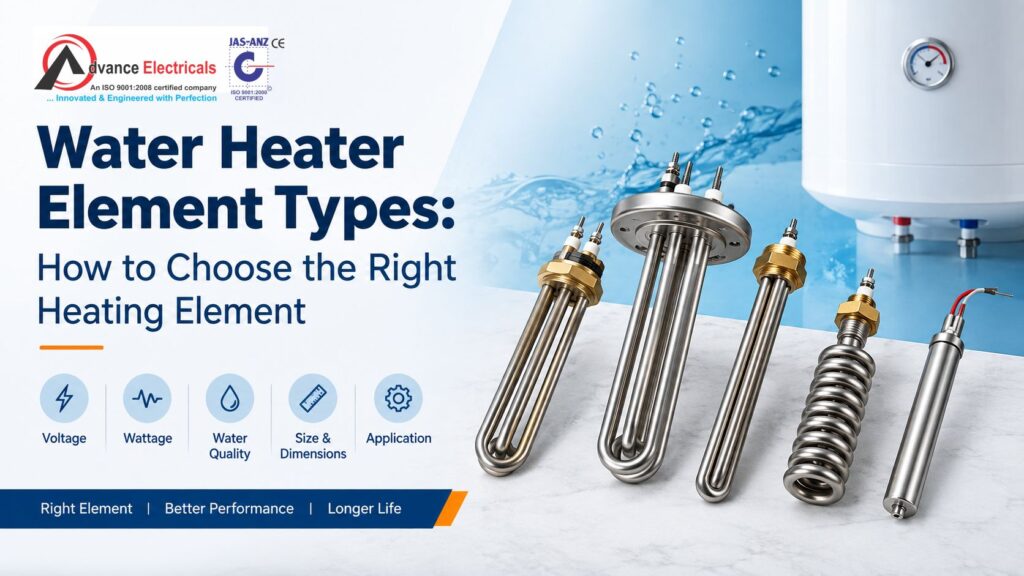
Different types of heating elements are available for different water heating applications. Some commonly used types include:
1. Tubular Water Heater Elements
Tubular heating elements are among the most commonly used elements for water heating applications. They generally consist of a resistance wire placed inside a metal sheath with electrical insulation between the wire and sheath.
The sheath protects the internal heating wire and allows efficient heat transfer to the water.
Applications include:
- Electric water heaters
- Storage water heaters
- Water tanks
- Industrial heating equipment
- Commercial water heating systems
Tubular elements can be manufactured in different shapes, sizes, wattages, and sheath materials according to application requirements.
2. Immersion Heater Elements
Immersion heater elements are designed to be directly immersed in the water or liquid being heated. The heating element transfers heat directly to the surrounding liquid.
These elements are commonly used in:
- Water storage tanks
- Industrial tanks
- Boilers
- Hot water systems
- Process heating equipment
Immersion heaters can be customized according to tank dimensions, voltage, wattage, mounting arrangement, and operating temperature.
3. Flanged Water Heater Elements
Flanged elements are mounted using a flange assembly. This design makes them suitable for larger tanks and industrial water heating systems.
The flange provides a secure mounting arrangement and can also make installation and maintenance easier.
They are commonly used in:
- Large water tanks
- Industrial storage tanks
- Boilers
- Commercial water heating systems
- Process heating applications
4. Screw-In Heating Elements
Screw-in elements are designed with a threaded connection that allows them to be directly screwed into a compatible water heater tank or fitting.
They are useful when easy installation and replacement are important.
Before selecting a screw-in element, it is important to check the thread size, element length, voltage, wattage, and available installation space.
5. High-Wattage Water Heater Elements
High-wattage elements are designed for applications that require faster water heating or larger heating capacity.
They can be used in commercial and industrial systems where a large quantity of water needs to be heated within a specific period.
However, higher wattage also means higher electrical load. Therefore, the power supply, wiring, control system, and heater construction should be suitable for the selected element.
How to Choose the Right Water Heater Element?
Selecting the right heating element requires more than simply choosing an element based on its physical size. Several technical factors should be considered.
- Check the Voltage
Voltage is one of the first specifications to check.
Common ratings may include:
- 120V
- 230V
- 240V
- 380V
- 415V
The element voltage should match the electrical supply and heater design. Using an incorrect voltage can affect performance and may damage the heating element.
- Select the Correct Wattage
Wattage determines how much heating power the element can provide.
For example, a small domestic water heater may require a lower wattage element, while a commercial or industrial system may require a higher wattage.
The required wattage depends on factors such as:
- Water volume
- Desired temperature
- Heating time
- Heat loss
- Tank insulation
- Application requirements
- Consider the Water Quality
Water quality can significantly affect heating element life.
Hard water contains minerals that can form deposits on the heating element. These deposits can reduce heat transfer and cause the element to operate at a higher temperature.
For applications with hard or mineral-rich water, the element material and surface construction should be selected carefully.
- Choose the Right Sheath Material
The sheath protects the heating element and comes into direct contact with the surrounding water in many applications.
Common sheath materials may include:
- Stainless steel
- Copper
- Incoloy and other nickel-based alloys
The right material depends on water chemistry, corrosion resistance requirements, operating temperature, and application conditions.
- Check the Element Dimensions
The physical dimensions of the heating element must match the water heater.
Important dimensions include:
- Overall length
- Diameter
- Mounting dimensions
- Thread size
- Flange size
- Terminal position
Always check the available space inside the tank before selecting an element.
- Consider the Heating Requirement
Different applications require different heating speeds.
If faster heating is required, a suitable higher-power element may be considered. However, the complete electrical and control system must be capable of safely handling the required load.
- Check the Mounting Type
The mounting arrangement should match the water heater.
Depending on the design, you may need:
- Screw-in element
- Flanged element
- Custom-mounted element
- Immersion element
Selecting the correct mounting type makes installation easier and helps ensure proper sealing.
- Consider Operating Temperature
The required operating temperature also affects element selection.
An element used for normal water heating may have different requirements from one used in an industrial process operating at higher temperatures.
The element should be selected according to the required temperature range and application conditions.
Factors That Affect Water Heater Element Life
The service life of a heating element depends on several conditions.
Water Quality
Mineral deposits and corrosive water can reduce element life.
Incorrect Voltage
Operating an element at an incorrect voltage can cause overheating or insufficient heating.
Excessive Scaling
Scale deposits can act as an insulating layer around the element. This can increase element temperature and reduce efficiency.
Incorrect Watt Density
The watt density should be appropriate for the application. An unsuitable watt density can result in excessive surface temperature and premature failure.
Poor Temperature Control
A faulty thermostat or temperature controller can cause continuous heating and unnecessary stress on the element.
Signs That a Water Heater Element May Need Replacement
A heating element may require inspection or replacement when you notice:
- Water is not heating properly
- Heating takes longer than usual
- Hot water supply is inconsistent
- Electrical faults occur
- The element shows visible corrosion or damage
- The element repeatedly trips electrical protection
- Excessive scale is present around the element
Before replacing an element, the complete heating system should be inspected to identify the actual cause of the problem.
Benefits of Choosing the Correct Water Heater Element
Using the right heating element can provide several benefits:
- Efficient water heating
- Consistent temperature
- Better heat transfer
- Reliable operation
- Reduced maintenance
- Longer element service life
- Suitable performance for the application
- Better control of energy consumption
The correct element should always be selected based on actual operating requirements rather than price alone.
Water Heater Element vs Immersion Heater
The terms water heater element and immersion heater are sometimes used interchangeably, but the exact design can vary.
A water heater element is a heating component designed specifically for heating water, while an immersion heater generally refers to a heating element that is immersed directly into a liquid.
Both can use electrical resistance heating, but their construction, mounting arrangement, wattage, sheath material, and application can differ.
Why Choose Advance Electricals for Water Heater Elements?
Advance Electricals manufactures and supplies heating solutions designed for different industrial and commercial applications. The company can provide heating elements based on required voltage, wattage, dimensions, mounting arrangement, sheath material, and application conditions.
Whether you need a standard heating element or a customized solution, proper technical specifications should be considered before finalizing the product.
Conclusion
Choosing the right water heater element is important for achieving efficient, reliable, and safe water heating. Factors such as voltage, wattage, sheath material, water quality, dimensions, mounting type, operating temperature, and watt density should all be considered before selecting an element.
For domestic, commercial, or industrial applications, a properly matched heating element can improve heating performance and help reduce unnecessary maintenance and replacement.
If you need a heating element designed according to your application requirements, Advance Electricals can help you select a suitable heating solution.
FAQs
- What is a water heater element?
A water heater element is an electrical heating component that converts electrical energy into heat to warm water inside a water heater or tank.
- Which type of element is commonly used for water heating?
Tubular and immersion-type heating elements are commonly used for water heating applications. The suitable type depends on the heater design and application.
- How do I choose the correct wattage for a water heater element?
Wattage depends on water volume, required temperature, heating time, tank insulation, and heat loss. The electrical supply should also be capable of handling the selected wattage.
- Does hard water affect heating elements?
Yes. Minerals in hard water can form scale on the element. Excessive scaling can reduce heat transfer and may shorten the element’s service life.
- Can water heater elements be customized?
Yes. Depending on the manufacturer and application, elements can be customized for voltage, wattage, length, diameter, sheath material, mounting type, and other requirements.
- How can I increase the life of a water heater element?
Using the correct element specifications, maintaining proper temperature control, reducing scale buildup, and regularly inspecting the heating system can help improve element service life.