
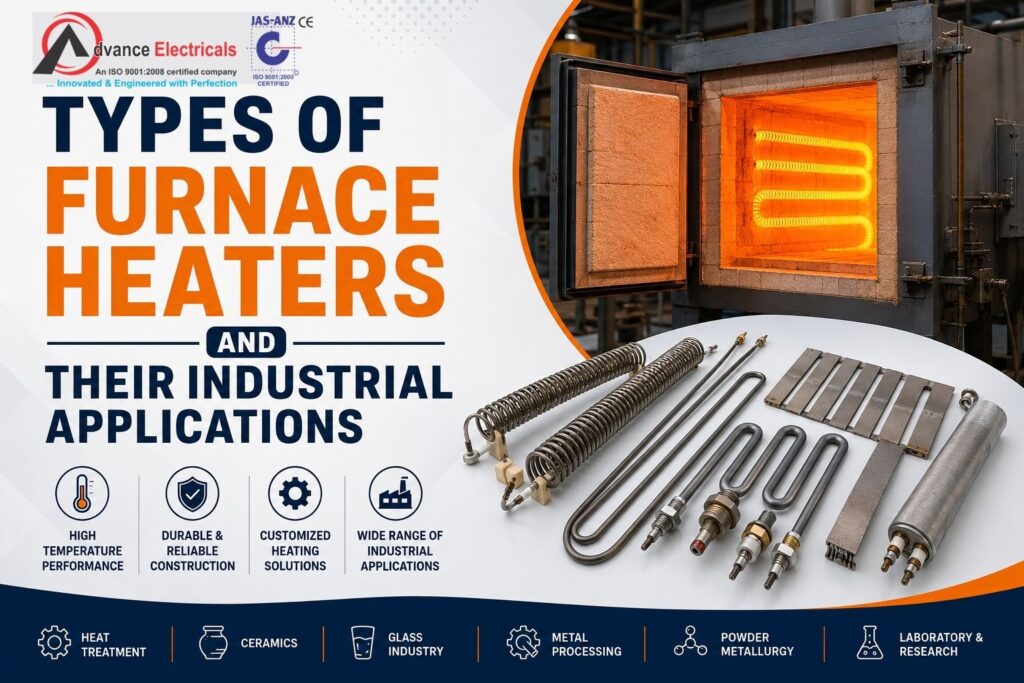
Furnace heaters are an important part of many industrial heating systems. They are designed to generate and maintain high temperatures required for processes such as heat treatment, metal processing, ceramics, glass production, and material testing. The right furnace heater helps industries achieve uniform heating, accurate temperature control, energy efficiency, and consistent product quality.
Different manufacturing processes require different heating methods. Therefore, understanding the types of furnace heaters, their working principles, advantages, and applications is important before selecting a heating solution.
In this blog, we will discuss the major types of furnace heaters and where they are commonly used in industrial applications.
What Is a Furnace Heater?
A furnace heater is a heating element or heating system installed inside a furnace to produce the required temperature. Depending on the furnace design and application, these heaters can operate at low, medium, or extremely high temperatures.
Industrial furnace heaters are generally manufactured using materials that can withstand high temperatures and repeated heating cycles. Common materials include nickel-chromium alloys, iron-chromium-aluminium alloys, silicon carbide, molybdenum disilicide, and other specialized materials.
The selection of a furnace heater depends on several factors, including:
- Required operating temperature
- Furnace size and design
- Heating atmosphere
- Heating time
- Required temperature uniformity
- Power requirements
- Material being processed
- Frequency of heating cycles
How Do Furnace Heaters Work?
Most electric furnace heaters work by converting electrical energy into heat. When electric current passes through a resistive heating element, the element produces heat.
The generated heat is transferred to the furnace chamber through radiation, convection, or conduction. A temperature controller and thermocouple are generally used to monitor and control the furnace temperature.
For high-temperature applications, furnace heaters must be carefully selected because the heating element needs to withstand thermal stress, oxidation, chemical exposure, and repeated temperature changes.
Major Types of Furnace Heaters
There are several types of furnace heaters available for industrial applications. Each type has specific operating characteristics and temperature capabilities.
1. Coil Furnace Heaters
Coil heaters are made by forming resistance heating wire or alloy into a coil shape. They can be installed in grooves, ceramic supports, or specially designed furnace structures.
Coil heaters provide efficient heat generation and can be designed according to the required wattage and operating temperature.
Applications:
- Heat treatment furnaces
- Laboratory furnaces
- Metal heating
- Industrial ovens
- Ceramic processing
- General-purpose heating systems
Coil heaters are suitable when reliable and controlled heating is required in a compact furnace design.
2. Strip Furnace Heaters
Strip heaters use flat resistance elements that provide a large heating surface. They are commonly installed along furnace walls or inside heating chambers.
Their larger surface area allows heat to be distributed effectively across the furnace chamber.
Applications include:
- Industrial furnaces
- Heat treatment equipment
- Drying ovens
- Metal processing
- Annealing systems
- Heating chambers
Strip heaters are particularly useful when uniform heating across a large surface is required.
3. Tubular Furnace Heaters
Tubular heaters consist of a resistance wire enclosed inside a metal tube with electrically insulating material between the heating wire and outer sheath.
The tubular construction provides mechanical strength and protection against the surrounding environment.
Common applications include:
- Heat treatment furnaces
- Industrial ovens
- Air heating systems
- Drying equipment
- Food processing equipment
- Chemical processing
Tubular heaters can be manufactured in different shapes and sizes, making them suitable for customized furnace designs.
4. Ceramic Furnace Heaters
Ceramic heaters use ceramic materials as supports or heating elements. Ceramic construction provides excellent resistance to high temperatures and thermal stress.
These heaters are widely used where conventional metallic heating elements may not be suitable.
Applications include:
- High-temperature furnaces
- Ceramic manufacturing
- Laboratory furnaces
- Heat treatment
- Sintering processes
- Glass processing
Ceramic furnace heaters can provide stable heating performance in demanding high-temperature environments.
5. Silicon Carbide Furnace Heaters
Silicon carbide, commonly known as SiC, is used for high-temperature electric heating applications. Silicon carbide heating elements can operate at temperatures significantly higher than many conventional metallic heating elements.
They are often available as rods, tubes, or other specialized shapes.
Industrial applications include:
- Ceramic firing
- Glass processing
- Heat treatment
- Metallurgical furnaces
- Laboratory furnaces
- Sintering
- Refractory material processing
SiC heaters are especially useful for high-temperature applications where durability and stable heat output are important.
6. Molybdenum Disilicide Furnace Heaters
Molybdenum disilicide, or MoSi₂, heating elements are designed for very high-temperature furnace applications. They offer excellent high-temperature performance and are commonly used in controlled-atmosphere or specialized industrial furnaces.
Applications include:
- Advanced ceramic production
- Laboratory high-temperature furnaces
- Sintering
- Glass processing
- Powder metallurgy
- Research and development
- High-temperature material testing
MoSi₂ heaters are suitable for industries that require extremely high operating temperatures and precise thermal control.
7. Infrared Furnace Heaters
Infrared heaters generate radiant heat that can directly heat the surface of the material. They can provide rapid heating and are useful when fast response is required.
Applications include:
- Paint curing
- Plastic processing
- Surface treatment
- Drying
- Coating processes
- Composite material processing
Infrared heating can reduce heating time in applications where direct surface heating is beneficial.
8. Immersion-Type Furnace Heating Elements
Immersion heating elements are designed to transfer heat directly into liquids or other materials. They are commonly used in specialized industrial heating tanks and systems associated with furnace or thermal processing operations.
Applications include:
- Chemical processing
- Oil heating
- Water heating
- Industrial tanks
- Cleaning systems
- Process heating
The sheath material must be selected according to the liquid, temperature, and chemical environment.
Industrial Applications of Furnace Heaters
Furnace heaters are used across many manufacturing industries because controlled high-temperature heating is essential for several production processes.
Metal Heat Treatment
Heat treatment is one of the most common applications of industrial furnaces. Materials such as steel, aluminium, copper, and other alloys are heated and cooled according to specific temperature cycles.
Furnace heaters help maintain the required temperature during processes such as:
- Annealing
- Hardening
- Tempering
- Stress relieving
- Normalizing
- Solution treatment
Accurate temperature control is essential because improper heating can affect the mechanical properties of the final product.
Ceramic Manufacturing
Ceramic products often require high-temperature firing and sintering. Furnace heaters provide the controlled heat required to transform raw ceramic materials into strong and stable finished products.
They are used in:
- Ceramic tiles
- Technical ceramics
- Electrical ceramics
- Refractory products
- Ceramic components
High-temperature heaters such as SiC and MoSi₂ elements are commonly considered for demanding ceramic applications.
Glass Manufacturing
Glass production requires carefully controlled temperatures. Furnace heating systems are used for melting, forming, annealing, and other thermal processes.
Furnace heaters help maintain consistent temperatures throughout the heating chamber, which can improve product quality and reduce thermal variations.
Powder Metallurgy
Powder metallurgy involves compacting metal powders and heating them to produce solid components. Controlled furnace heating is required during the sintering process.
Furnace heaters provide the controlled thermal environment needed to achieve consistent material properties and dimensional stability.
Heat Treatment of Industrial Components
Automotive, aerospace, engineering, and machinery industries use furnaces to treat components such as gears, shafts, tools, springs, fasteners, and other metal parts.
The correct furnace heating system helps maintain consistent processing temperatures across different production batches.
Laboratory and Research Applications
Laboratories use high-temperature furnaces for material testing, research, thermal analysis, and experimental processing.
Compact furnace heaters are often preferred for laboratory equipment because they allow accurate temperature control and repeatable heating cycles.
Benefits of Using the Right Furnace Heater
Choosing the appropriate furnace heater can provide several benefits to industrial operations.
1. Better Temperature Control
A properly selected heater works effectively with temperature controllers and sensors, helping maintain the desired furnace temperature.
2. Uniform Heating
Correct heater placement and suitable heater design can improve temperature distribution throughout the furnace chamber.
3. Improved Energy Efficiency
An appropriately sized heating element can reduce unnecessary energy consumption while delivering the required heat output.
4. Longer Service Life
Selecting a heater that matches the furnace temperature, atmosphere, and operating cycle can reduce premature heating-element failure.
5. Consistent Product Quality
Stable heating conditions help maintain consistency across production batches, especially in heat treatment and material processing.
6. Reduced Maintenance
A suitable heater design can minimize frequent replacements and unexpected production interruptions.
How to Choose the Right Furnace Heater?
Selecting a furnace heater should be based on the complete operating conditions rather than temperature alone.
Consider these factors before making a selection:
Operating Temperature: Determine the maximum and continuous working temperature required by the process.
Furnace Atmosphere: Check whether the furnace operates in air, vacuum, inert gas, reducing atmosphere, or another environment.
Furnace Size: The chamber dimensions influence the required heating capacity and heater arrangement.
Power Requirement: Calculate the required wattage based on furnace volume, material load, heating time, insulation, and heat losses.
Heating Rate: If the application requires rapid heating, the heater must be capable of delivering sufficient power without compromising its service life.
Material Compatibility: The heating element material should be compatible with the furnace atmosphere and operating temperature.
Temperature Uniformity: Heater positioning should be considered carefully when the application requires highly uniform temperatures.
Duty Cycle: Continuous operation and frequent heating/cooling cycles can require different heater constructions.
Furnace Heater vs. Industrial Oven Heater
Although furnace heaters and oven heaters perform similar functions, their applications can differ.
Industrial ovens generally operate at comparatively lower temperatures and are commonly used for drying, curing, baking, and preheating. Furnaces are designed for more demanding high-temperature processes such as metal heat treatment, melting, sintering, and ceramic firing.
The heater construction therefore depends heavily on the required temperature and process conditions.
Why Custom Furnace Heaters Can Be Important
Every industrial furnace is not designed the same way. Furnace dimensions, heating zones, temperature requirements, installation space, and operating atmosphere can vary significantly.
For this reason, customized heating elements can be beneficial for specialized applications. Manufacturers can design heaters according to parameters such as:
- Voltage
- Wattage
- Resistance
- Shape
- Dimensions
- Operating temperature
- Mounting arrangement
- Heating zone
- Material requirements
A properly engineered heater can improve heating performance and help meet specific production requirements.
Maintenance Tips for Furnace Heaters
Regular maintenance can help extend the service life of furnace heating elements.
- Inspect heating elements for cracks, deformation, or oxidation.
- Check electrical connections regularly.
- Monitor changes in heating time and power consumption.
- Keep furnace insulation in good condition.
- Avoid unnecessary thermal shock.
- Check thermocouples and temperature controllers.
- Keep the furnace chamber clean.
- Replace damaged elements before they affect other components.
- Follow the manufacturer’s recommended operating limits.
Final Thoughts
Furnace heaters play a critical role in industries where controlled high-temperature heating is required. From metal heat treatment and ceramic manufacturing to glass processing and powder metallurgy, different furnace heater designs are available for different industrial requirements.
Coil, strip, tubular, ceramic, silicon carbide, molybdenum disilicide, and infrared heaters each offer specific advantages. The best choice depends on factors such as operating temperature, furnace atmosphere, heating rate, power requirement, furnace size, and duty cycle.
For reliable industrial heating performance, it is important to work with an experienced Furnace Heater Manufacturer that can understand your process requirements and provide the appropriate heating solution.
Conclusion
The right furnace heater is essential for achieving reliable, efficient, and consistent industrial heating. Understanding the different types of furnace heaters and their industrial applications makes it easier to select a heating solution that matches the requirements of a particular manufacturing process. Contact Advance Electricals today.
For industrial applications where temperature accuracy, reliability, and long service life matter, selecting a heater based on actual operating conditions—not just the required temperature—is the key to better furnace performance.
Frequently Asked Questions (FAQs)
Furnace heaters are used to generate controlled high temperatures for processes such as heat treatment, annealing, sintering, ceramic firing, glass processing, and material testing.
Silicon carbide and molybdenum disilicide heating elements are commonly considered for high-temperature furnace applications. The final selection depends on temperature and furnace atmosphere.
Consider operating temperature, furnace size, required wattage, heating rate, atmosphere, material being processed, duty cycle, and required temperature uniformity.
Yes. Industrial furnace heaters can often be customized according to voltage, wattage, resistance, dimensions, shape, material, and installation requirements.
Correct sizing, proper installation, controlled heating and cooling cycles, good furnace insulation, regular inspection, and operation within recommended limits can help increase heater life.
Furnace heaters are widely used in metalworking, automotive, aerospace, ceramics, glass, powder metallurgy, chemical processing, electronics, engineering, and research industries.
Advance Electricals provides reliable and application-focused furnace heaters designed for different industrial heating requirements. We focus on suitable heater selection, quality materials, accurate heating performance, and durable construction. Our furnace heaters can be customized according to required temperature, voltage, wattage, size, shape, and installation conditions. With a focus on consistent performance and customer requirements, Advance Electricals is a suitable choice for industries looking for dependable industrial heating solutions.