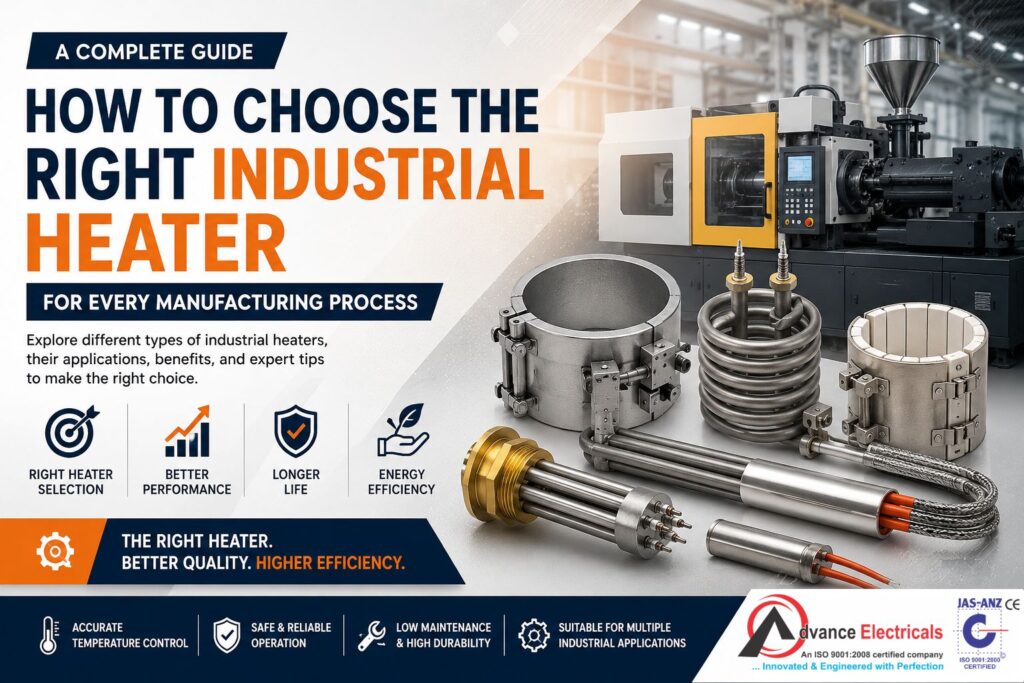
Industrial heating is an essential part of modern manufacturing. From plastic injection moulding and packaging to pharmaceuticals, food processing, chemical production, and metal fabrication, almost every industry relies on Industrial heaters to maintain accurate temperatures and ensure smooth production.
However, selecting the right industrial heater is not as simple as choosing the highest temperature or the lowest price. Every manufacturing process has unique heating requirements. Factors such as operating temperature, material type, heating speed, energy efficiency, and installation environment all influence which heater will perform best.
Using the wrong heater can result in uneven heating, higher electricity costs, frequent maintenance, machine downtime, and poor product quality. On the other hand, choosing the right heating solution improves production efficiency, reduces operating costs, and extends equipment life.
In this guide, you will learn how to select the right industrial heater for different manufacturing processes, understand the key factors to consider before buying, and discover which heater is best suited for your application.
Why Choosing the Right Industrial Heater Matters
An industrial heater is more than just a heating element. It directly affects production quality, machine performance, and operating costs.
A properly selected heater helps you:
- Maintain consistent production quality
- Reduce electricity consumption
- Improve heating efficiency
- Minimize machine downtime
- Increase heater lifespan
- Lower maintenance costs
- Improve workplace safety
Instead of focusing only on the purchase price, manufacturers should evaluate the total operating cost of the heater over its lifetime.
What Should You Consider Before Choosing an Industrial Heater?
Before selecting any industrial heater, it is important to understand your production process. Asking the right questions helps you choose a heating solution that delivers reliable performance.
1. What Material Needs to Be Heated?
Different materials require different heating methods.
| Material | Recommended Heater |
| Plastic | Coil Heater, Nozzle Heater, Ceramic Band Heater |
| Air | Air Heater, Tubular Heater |
| Water | Immersion Heater |
| Oil | Immersion Heater, Drum Heater |
| Metal Dies | Cartridge Heater |
| Furnace Chamber | Furnace Heater |
| Electrical Panel | Panel Space Heater |
Choosing a heater designed for the material improves efficiency and extends service life.
2. What Temperature Is Required?
Every heater is designed to operate within a specific temperature range.
| Temperature Requirement | Suitable Heater |
| Up to 250°C | Strip Heater |
| 250°C–450°C | Ceramic Band Heater |
| 300°C–750°C | Cartridge Heater |
| High Temperature Processes | Furnace Heater |
| Surface Heating | Infrared Heater |
Selecting a heater outside its recommended temperature range can reduce efficiency and shorten its lifespan.
3. How Fast Should the Heating Process Be?
Some manufacturing processes require instant heating, while others need slow and uniform heat distribution.
Fast Heating Applications
- Plastic Injection Moulding
- Packaging Equipment
- Medical Devices
- Hot Runner Systems
Recommended Heaters
- Coil Heater
- Cartridge Heater
- Nozzle Heater
Uniform Heating Applications
- Chemical Processing
- Food Manufacturing
- Oil Heating
- Industrial Drying
Recommended Heaters
- Tubular Heater
- Drum Heater
- Immersion Heater
4. Consider the Operating Environment
Industrial heaters often work under demanding conditions such as:
- High humidity
- Dust
- Chemical exposure
- High vibration
- Outdoor installations
Selecting the correct sheath material helps prevent corrosion and improves durability.
| Sheath Material | Best Applications |
| Stainless Steel | Water & Food Processing |
| Incoloy | High Temperature Applications |
| Brass | Plastic Processing |
| Ceramic | High Surface Temperature |
| Mild Steel | General Industrial Use |
5. Focus on Energy Efficiency
Energy consumption has a direct impact on manufacturing costs.
To improve efficiency:
- Select the correct heater size.
- Avoid oversized heaters.
- Use insulation jackets to reduce heat loss.
- Install accurate temperature controllers.
- Replace damaged thermocouples promptly.
- Perform regular preventive maintenance.
A well-maintained heating system can significantly reduce energy consumption over time.
Industrial Heater Selection by Manufacturing Process
Every manufacturing industry has different heating requirements. The table below provides a quick overview of the most suitable industrial heaters for common applications.
| Manufacturing Process | Recommended Heater |
| Plastic Injection Moulding | Coil Heater, Nozzle Heater, Ceramic Band Heater |
| Plastic Extrusion | Ceramic Band Heater, Coil Heater |
| Packaging Industry | Cartridge Heater, Air Heater |
| Food Processing | Tubular Heater, Immersion Heater |
| Pharmaceutical Manufacturing | Cartridge Heater, Tubular Heater |
| Chemical Processing | Drum Heater, Immersion Heater |
| Textile Industry | Infrared Heater, Air Heater |
| Metal Heat Treatment | Furnace Heater |
| Electrical Panels | Panel Space Heater |
| Corrugated Box Manufacturing | Corrugation Heater |
This table can serve as a starting point, but the final heater selection should always be based on your specific process requirements.
Most Common Types of Industrial Heaters
Coil Heaters
Coil heaters are compact, flexible heating elements that deliver high watt density and excellent heat transfer. They are commonly used in plastic injection moulding machines and hot runner systems where fast and precise heating is required.
Best Applications
- Plastic Injection Moulding
- Hot Runner Systems
- Nozzle Heating
- Packaging Equipment
Key Benefits
- Rapid heating
- Compact design
- Uniform temperature distribution
- Long operating life
Nozzle Heaters
Nozzle heaters are specially designed to maintain the temperature of molten plastic inside injection moulding machine nozzles.
Applications
- Injection Moulding
- PET Processing
- Plastic Extrusion
Advantages
- Accurate temperature control
- Better product quality
- Reduced material wastage
- Faster production cycles
High Density Cartridge Heaters
High-density cartridge heaters are designed for applications that require concentrated heat in a compact space. They are widely used inside dies, moulds, sealing equipment, and engineering machinery.
Applications
- Dies
- Moulds
- Packaging Equipment
- Medical Devices
Advantages
- High heating efficiency
- Fast temperature response
- Compact construction
- Reliable performance
Tubular Heaters
Tubular heaters are among the most versatile industrial heaters because they can heat air, liquids, gases, and metal surfaces.
They are widely used across different industries due to their flexible design and reliable performance.
Applications
- Industrial Ovens
- Water Heating
- Oil Heating
- Air Heating
- Drying Equipment
Benefits
- Easy installation
- High durability
- Suitable for multiple applications
- Excellent heat transfer
Infrared Heaters
Infrared heaters transfer heat directly to the product surface instead of heating the surrounding air. This makes them highly energy-efficient for many industrial applications.
Applications
- Paint Drying
- Powder Coating
- Textile Processing
- Food Drying
- Printing Industry
Advantages
- Instant heating
- Lower energy consumption
- Faster drying
- Contact-free heating
Ceramic Band Heaters
Ceramic band heaters are commonly used on injection moulding and extrusion machine barrels. They provide excellent insulation and uniform heat distribution.
Applications
- Plastic Extrusion
- Injection Moulding
- Blow Moulding
Benefits
- High operating temperature
- Better insulation
- Improved energy efficiency
- Longer service life
Air Heaters
Air heaters are designed to heat moving air for drying, curing, and industrial ventilation processes.
Applications
- Drying Chambers
- Industrial Ovens
- HVAC Systems
- Packaging Machines
Benefits
- Uniform hot air distribution
- Reliable heating
- Improved drying efficiency
Which Industrial Heater Is Right for You?
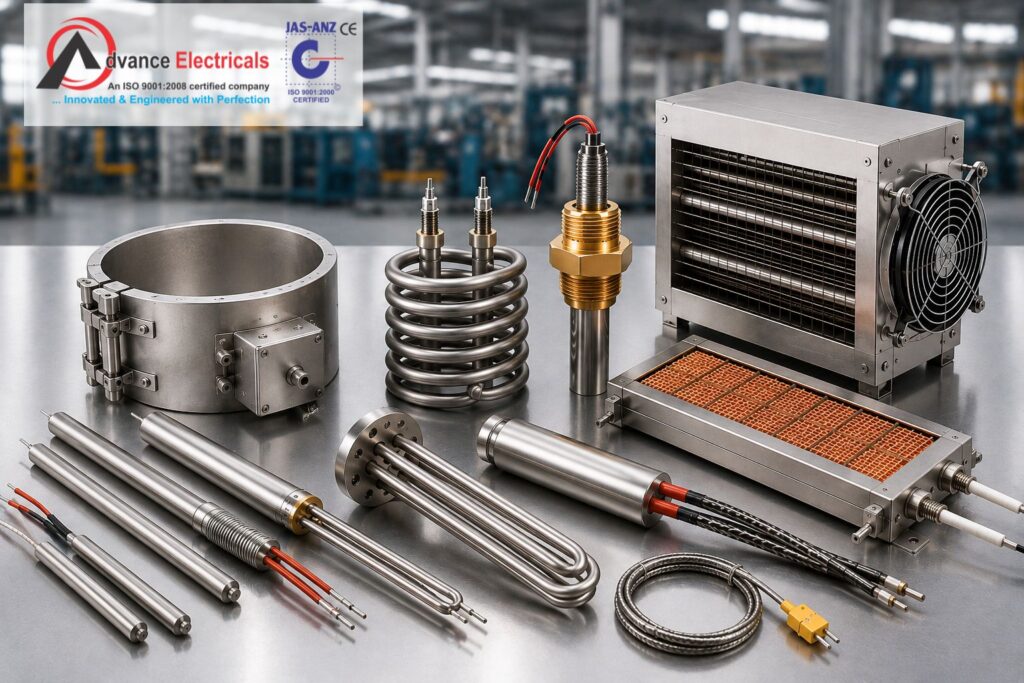
If you are unsure which heater to choose, start by identifying:
- The material you need to heat
- The required operating temperature
- The heating method (contact, air, or radiant)
- Available installation space
- Voltage and wattage requirements
- Environmental conditions
- Production speed
- Energy efficiency goals
Once these factors are clear, selecting the right heater becomes much easier and helps avoid unnecessary maintenance or replacement costs.
More Industrial Heaters and Their Applications
Immersion Heaters
Immersion heaters are designed to heat liquids by being directly placed inside tanks, vessels, or containers. They provide efficient heat transfer and are widely used where water, oil, or chemicals need to be heated quickly.
Common Applications
- Water Heating Systems
- Oil Heating
- Chemical Processing
- Cleaning Equipment
- Industrial Tanks
Key Benefits
- Fast and efficient liquid heating
- Low maintenance
- Easy installation
- Suitable for various industrial liquids
Drum Heaters
Drum heaters are used to maintain the temperature of materials stored in drums and barrels. They help prevent liquids from becoming thick or solid during storage.
Common Applications
- Chemical Industry
- Paint Manufacturing
- Food Processing
- Oil and Lubricants
- Adhesives
Key Benefits
- Uniform drum heating
- Easy installation
- Better material flow
- Reduced product waste
Furnace Heaters
Furnace heatersare designed for high-temperature industrial operations where consistent heat is essential.
Common Applications
- Heat Treatment
- Metal Processing
- Ceramic Industry
- Glass Manufacturing
Key Benefits
- High temperature capability
- Reliable performance
- Long operating life
- Durable construction
Strip Heaters
Strip heaters are flat electric heaters used to heat metal surfaces, plates, and machinery components.
Common Applications
- Packaging Machines
- Mould Heating
- Drying Equipment
- Industrial Machinery
Key Benefits
- Simple installation
- Uniform heating
- Compact design
- Cost-effective solution
Casting Heaters
Casting heaters are manufactured by embedding heating elements inside cast aluminium or bronze. They are known for excellent heat retention and durability.
Common Applications
- Plastic Processing
- Packaging Equipment
- Die Casting Machines
- Industrial Machinery
Key Benefits
- Uniform temperature distribution
- Strong mechanical design
- Excellent heat retention
- Long service life
Panel Space Heaters
Panel space heaters protect electrical panels from moisture and condensation.
Common Applications
- Electrical Control Panels
- Automation Cabinets
- Switchgear
- Industrial Control Systems
Key Benefits
- Prevents condensation
- Protects electrical components
- Improves equipment reliability
- Reduces maintenance
Corrugation Heaters
Corrugation heatersare specially designed for corrugated box manufacturing machines.
Common Applications
- Paper Corrugation Plants
- Packaging Industry
Key Benefits
- Stable heating
- Better production quality
- Improved energy efficiency
Water Heater Elements
Water heater elements are used in industrial water heating systems, boilers, and commercial equipment.
Common Applications
- Water Tanks
- Boilers
- Commercial Water Heating
- Industrial Cleaning Systems
Key Benefits
- Efficient water heating
- Long operating life
- Easy replacement
- Reliable performance
Thermocouples
A thermocouple is a temperature sensor that works alongside industrial heaters. Accurate temperature measurement is essential for maintaining product quality and protecting equipment.
Common Applications
- Plastic Injection Moulding
- Industrial Ovens
- Furnaces
- Chemical Processing
- Food Manufacturing
Key Benefits
- Accurate temperature monitoring
- Fast response time
- High reliability
- Easy installation
Insulation Jackets for Plastic Machines
Insulation jackets reduce heat loss from machine barrels and heaters. They improve energy efficiency and make the workplace safer by lowering surface temperatures.
Benefits
- Lower electricity consumption
- Reduced heat loss
- Improved operator safety
- Better heater performance
- Longer heater life
Quick Comparison of Industrial Heaters
| Heater Type | Best For | Main Advantage |
| Coil Heater | Injection Moulding | Fast heating |
| Nozzle Heater | Plastic Processing | Precise temperature control |
| High Density Cartridge Heater | Dies & Moulds | Compact and powerful |
| Tubular Heater | Air & Liquid Heating | Versatile design |
| Infrared Heater | Drying & Curing | Energy-efficient surface heating |
| Ceramic Band Heater | Extrusion & Moulding | Uniform barrel heating |
| Immersion Heater | Water & Oil | Direct liquid heating |
| Drum Heater | Chemicals & Oils | Maintains material temperature |
| Furnace Heater | Metal Processing | High-temperature operation |
| Strip Heater | Flat Surfaces | Easy installation |
| Casting Heater | Heavy Industrial Machines | Excellent heat retention |
| Panel Space Heater | Electrical Panels | Prevents condensation |
Common Mistakes to Avoid
Many heating problems can be prevented by avoiding these common mistakes.
Choosing the Wrong Heater Type
Always select a heater based on the application, not just the price.
Ignoring Watt Density
Incorrect watt density can reduce heater life and affect heating performance.
Using Poor Temperature Control
A reliable thermocouple and controller help maintain stable temperatures.
Skipping Preventive Maintenance
Regular inspection helps identify small problems before they become major failures.
Buying from Unknown Suppliers
Choose an experienced manufacturer that offers technical support, quality products, and customization options.
Maintenance Tips for Longer Heater Life
Simple maintenance practices can improve performance and reduce downtime.
- Inspect heaters regularly for wear or damage.
- Keep heating surfaces clean.
- Tighten electrical connections.
- Replace damaged thermocouples immediately.
- Check insulation resistance during maintenance.
- Use the correct operating temperature.
- Replace worn heaters before they fail unexpectedly.
A preventive maintenance schedule is always more cost-effective than emergency repairs.
Tips to Improve Energy Efficiency
Reducing energy consumption lowers production costs and supports sustainable manufacturing.
- Use heaters with the correct wattage.
- Install insulation jackets where possible.
- Maintain accurate temperature control.
- Avoid unnecessary overheating.
- Replace aging heating elements.
- Schedule regular maintenance.
Even small improvements in heating efficiency can lead to noticeable energy savings over time.
Industrial Heater Buyer’s Checklist
Before placing an order, make sure you know:
- Manufacturing process
- Material to be heated
- Required operating temperature
- Heater dimensions
- Voltage and wattage
- Heating speed
- Installation method
- Operating environment
- Temperature control requirements
- Quantity required
Sharing these details with your heater manufacturer helps ensure the best solution for your application.
Conclusion
Selecting the right industrial heater is one of the most important decisions for any manufacturing process. The correct heating solution improves production efficiency, ensures consistent product quality, reduces energy consumption, and minimizes maintenance costs.
Before making a decision, evaluate your application, operating temperature, material type, installation environment, and heating method. Understanding these factors helps you choose a heater that delivers reliable performance and long-term value.
Whether your process requires Coil Heaters, Tubular Heaters, Infrared Heaters, Immersion Heaters, Furnace Heaters, Ceramic Band Heaters, Nozzle Heaters, Strip Heaters, or Thermocouples, selecting a high-quality product from an experienced manufacturer is essential for achieving the best results.
Why Choose Advance Electricals?
At Advance Electricals, we manufacture a wide range of industrial heating solutions designed for different manufacturing industries. Our products are built using quality materials and are available in standard as well as custom specifications.
Our product range includes:
- Industrial Heaters
- Coil Heaters
- Brass Coil Heaters
- Nozzle Heaters
- High Density Cartridge Heaters
- Tubular Heaters
- Infrared Heaters
- Ceramic Band Heaters
- Strip Heaters
- Immersion Heaters
- Drum Heaters
- Furnace Heaters
- Casting Heaters
- Panel Space Heaters
- Corrugation Heaters
- Thermocouples
- Water Heater Elements
- Insulation Jackets for Plastic Machines
- Hot Runner Heaters
- Manifold Heaters
Whether you need a standard product or a customized heating solution, our team can help you choose the right industrial heater for your manufacturing process.
Looking for the right industrial heating solution? Contact Advance Electricals today to discuss your requirements and get expert guidance for your application.
Frequently Asked Questions (FAQs)
Coil heaters, nozzle heaters, ceramic band heaters, and hot runner heaters are commonly used because they provide fast and accurate temperature control.
Immersion heaters are ideal for heating water, oil, chemicals, and other industrial liquids.
Tubular heaters are considered one of the most versatile options because they can heat air, liquids, and metal surfaces.
Thermocouples provide accurate temperature measurement, helping maintain product quality and protecting equipment from overheating.
Yes. Industrial heaters can be manufactured in custom sizes, voltages, wattages, and designs to suit specific applications.
Visual inspections should be carried out regularly, while electrical testing and preventive maintenance should follow the schedule recommended by the manufacturer.